
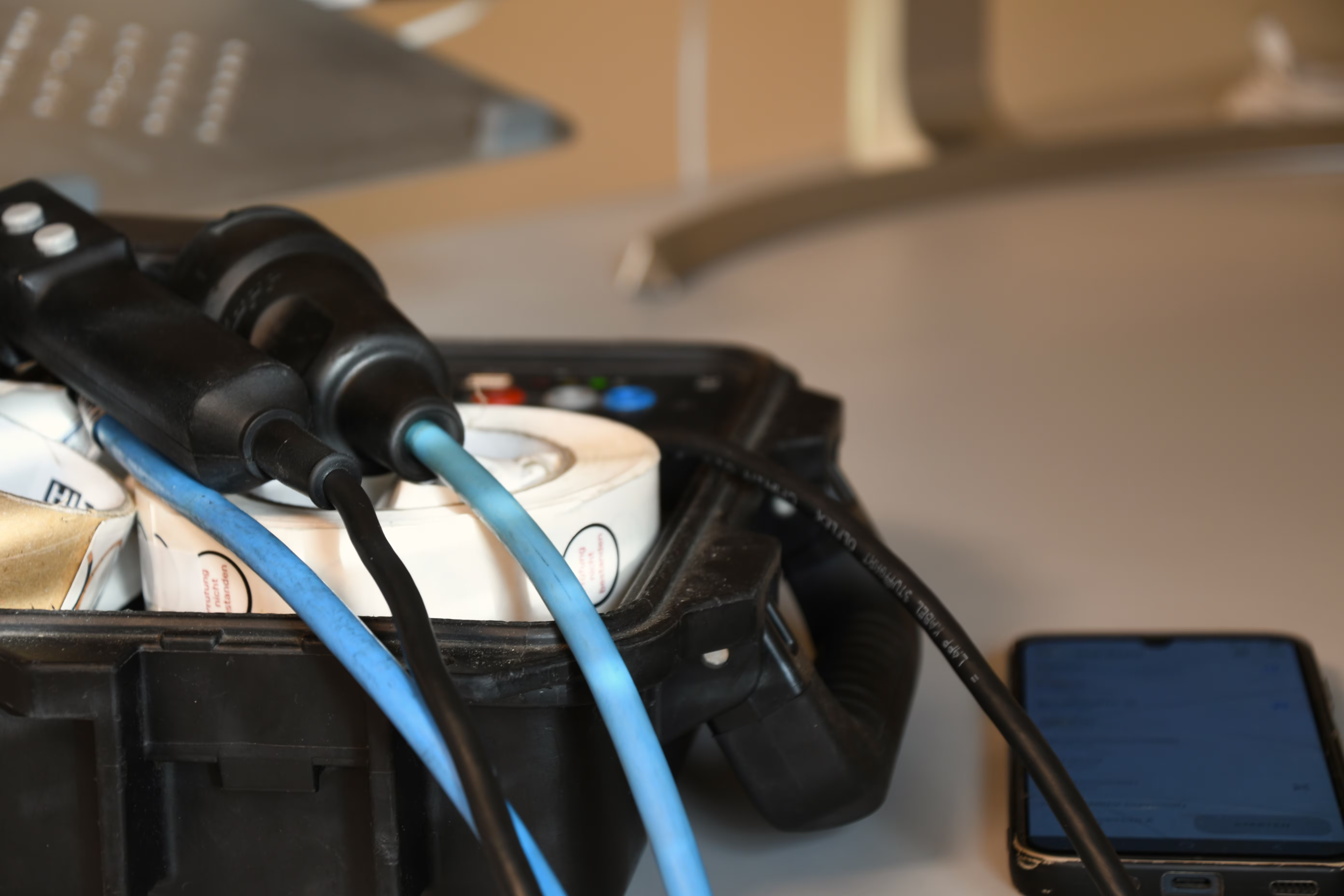
Reactive vs. preventive maintenance: The difference in numbers
Key Takeaways
- Reactive maintenance involves repairs only after a failure occurs. According to IDS (2025), unplanned downtime costs companies in the EU and the UK over 80 billion euros annually.
- Preventive maintenance is performed at fixed intervals. According to the Machine Tracking ROI Study (2024), scheduled maintenance reduces equipment downtime by 30%.
- DGUV Regulation 3 mandates recurring inspections for portable electrical equipment. Purely reactive maintenance is not legally sufficient in this context.
- Digital maintenance planners are primarily categorized by asset type: CMMS and ERP for facilities, IoT platforms for connected machinery, and asset intelligence platforms like seventhings for assets without sensors.
A testing device fails in the middle of a measurement. The replacement is at another location, and the job is on hold. This is what reactive maintenance looks like in practice: you act only when something breaks. Preventive maintenance reverses this order by scheduling maintenance before a failure occurs. Downtime costs, search times, tool losses, and statutory inspection deadlines determine which strategy is more cost-effective. Knowing these figures allows you to decide how much planning each asset class requires.
What is reactive maintenance?
Reactive maintenance (also known as corrective or run-to-failure maintenance) is a strategy where an asset is only repaired or replaced after a malfunction or failure. The DIN EN 13306 standard classifies this as corrective maintenance: the action begins after a fault is detected. There are no scheduled maintenance appointments in this strategy.
The advantage lies in the minimal planning effort. Devices that never fail incur no maintenance costs. The disadvantage: the timing is dictated by the failure. Replacement equipment, technicians, and spare parts must be organized at short notice, often at premium rates. For mobile assets, an additional question arises before repairs can even begin: where is the device currently located?
What is preventive maintenance?
Preventive maintenance encompasses all measures taken at fixed intervals or according to defined criteria to prevent failures before they occur. According to DIN 31051, this primarily includes maintenance and inspection, such as cleaning, calibration, visual checks, or safety inspections. The maintenance date is set before any fault occurs.
DIN EN 13306 distinguishes between three forms of preventive maintenance:
- Predetermined maintenance: fixed intervals based on time or usage, for example, an inspection every six months.
- Condition-based maintenance: maintenance performed as soon as inspection or measurement indicates wear.
- Predictive maintenance: forecasting the time of failure based on real-time condition data, typically via sensors.
Predetermined maintenance is the standard for most mobile assets. Testing equipment, ladders, power tools, or mobile medical devices lack the sensors required to provide continuous condition data.
What is the difference between reactive and preventive maintenance? Reactive maintenance begins after an asset fails, while preventive maintenance occurs beforehand at scheduled intervals. Reactive maintenance saves on planning effort but leads to unplanned downtime and rush orders. Preventive maintenance makes schedules and costs predictable and fulfills legal inspection requirements such as DGUV Regulation 3. seventhings supports preventive maintenance with fixed maintenance intervals, tasks, and email reminders for assets without sensors.
Reactive vs. preventive maintenance compared
The most significant difference is in downtime: according to the Machine Tracking ROI Study (2024), scheduled maintenance reduces equipment downtime by 30%. The table below compares reactive, preventive, and predictive maintenance.
The table shows a clear pattern. Predictive maintenance requires sensors and is therefore only an option for a small portion of inventory. Reactive maintenance is not an option wherever legal inspection deadlines apply. For the majority of physical assets in small and medium-sized enterprises, preventive maintenance remains the realistic standard.
What does reactive maintenance cost?
In 2025, IDS estimated the cost of unplanned downtime in the EU and the UK at over 80 billion euros per year. This figure stems from production losses, rush orders, and idle time for staff who rely on functional equipment.
For mobile assets, there are additional costs that do not appear in any downtime statistics. According to IDC (2023), employees spend an average of 5.3 hours per week searching for information and work equipment. Without tracking, 12 to 18% of tools and equipment are lost annually, according to Nexess Solutions (2024). And during audits, 18% of assets cannot be located, according to KPMG (2024).
In conversations with maintenance managers, we at seventhings hear a recurring pattern: the maintenance plan exists, usually as an Excel list. However, when the inspection date arrives, the device is missing because it has been lent out, is at another location, or is in a service vehicle. The inspection is postponed, the next deadline is forgotten, and the planned maintenance turns back into a reaction to a failure. For mobile assets, the link between the maintenance plan and the device is usually missing.
If a device fails despite maintenance, a fault report via QR code shortens the path to repair. Employees scan the code on the device, describe the damage, and attach a photo if necessary. The report is logged as an open task for the asset, linked to device data and maintenance history.
Why is reactive maintenance more expensive than scheduled maintenance? With reactive maintenance, the failure dictates the timing: replacement equipment, technicians, and parts must be sourced at short notice, and downtime lasts until everything is available. According to IDS (2025), unplanned downtime costs companies in the EU and the UK over 80 billion euros per year. seventhings connects every asset to its maintenance plan and history via QR code, ensuring that maintenance takes place on the scheduled date on the correct device.
Where is preventive maintenance legally required?
For portable electrical equipment, DGUV Regulation 3 specifies a guideline of six months between inspections, or three months on construction sites. If the failure rate is below 2%, the deadlines may be extended: up to one year in workshops and production facilities, and up to two years in offices.
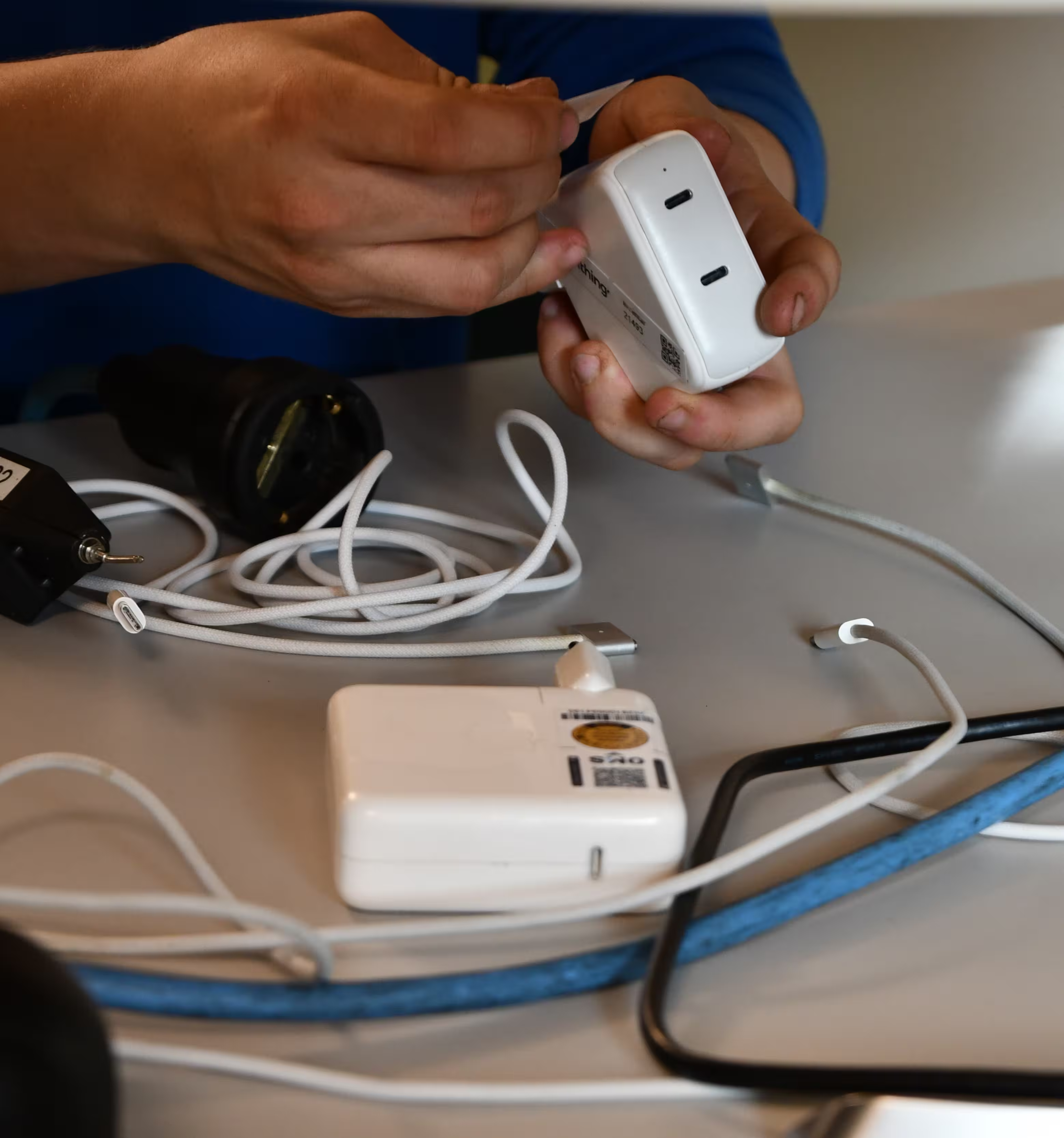
DGUV Regulation 3 is not the only inspection requirement. For medical devices, the Medical Devices Operator Ordinance (MPBetreibV) mandates safety and metrological checks. In quality management according to ISO 9001, test equipment must be calibrated at fixed intervals. What all these requirements have in common is that documentation is what counts. According to ISACA (2024), 41% of audit failures are due to manually maintained asset records.
A digital maintenance plan tracks these deadlines for each asset or asset category. In seventhings, due inspections are created as tasks, and the responsible person receives an email reminder. The inspection itself is carried out via the inventory app documented directly on the device, with a report based on the template and a signature in the app. seventhings automatically saves the history.
How often must portable electrical equipment be tested? DGUV Regulation 3 specifies a guideline of six months, or three months on construction sites. If the failure rate is below 2%, longer intervals are possible, up to two years in offices. The specific intervals are determined by the employer based on a risk assessment. In seventhings, these inspection intervals can be stored for each asset, and every inspection can be verified with a date, inspector, and signature.
Which digital maintenance planners help with predictive maintenance?
According to Forrester (2023), 73% of ERP users maintain parallel Excel lists, often for maintenance schedules. Digital maintenance planners replace these lists. Which one is the right fit depends on two questions: What exactly should "predictive" mean, and which assets are being maintained?
The term predictive maintenance is used in two ways. It refers either to proactive, preventive maintenance with fixed intervals or to predictive maintenance that forecasts failures based on sensor data. The second variant only works with assets that have sensors and a network connection. Five categories of software cover the market:
- CMMS (Computerized Maintenance Management System): Maintenance planning software for technical equipment, including work orders, spare parts management, and technician deployment. Its strength lies in stationary machinery and equipment.
- ERP maintenance modules (e.g., SAP PM): Maintenance within the ERP, linked to asset accounting and purchasing. Suitable for large, balance-sheet-relevant assets. For thousands of low-value, mobile assets, maintenance in the ERP involves high administrative effort.
- CAFM systems: Maintenance of building services equipment such as ventilation, elevators, or fire protection, linked to buildings and floor plans. An example is the maintenance of air filter systems, whose deadlines are managed in the CAFM.
- IoT and condition monitoring platforms: the only category for predictive maintenance in the strict sense. They analyze vibration, temperature, or runtime data and require networked equipment.
- Asset intelligence platforms like seventhings: preventive maintenance at fixed intervals for assets without sensors, such as mobile tools, DGUV V3 equipment, test equipment, PPE, mobile medical technology, conference technology, or furniture. Identification via QR code or barcode, maintenance tasks with email reminders, and history per asset. seventhings complements CMMS, ERP, and CAFM systems and does not replace any of them.
According to seventhings' assessment, around 80% of a typical medium-sized company's physical assets have no sensors and no network connection. For these assets, "predictive" ends with well-organized preventive maintenance: the dates are set before a failure occurs, and every inspection is documented. Predictive maintenance projects cannot reach this part of the inventory because the data source is missing. Anyone wanting to work proactively should therefore start with clean master data and fixed intervals for these assets.
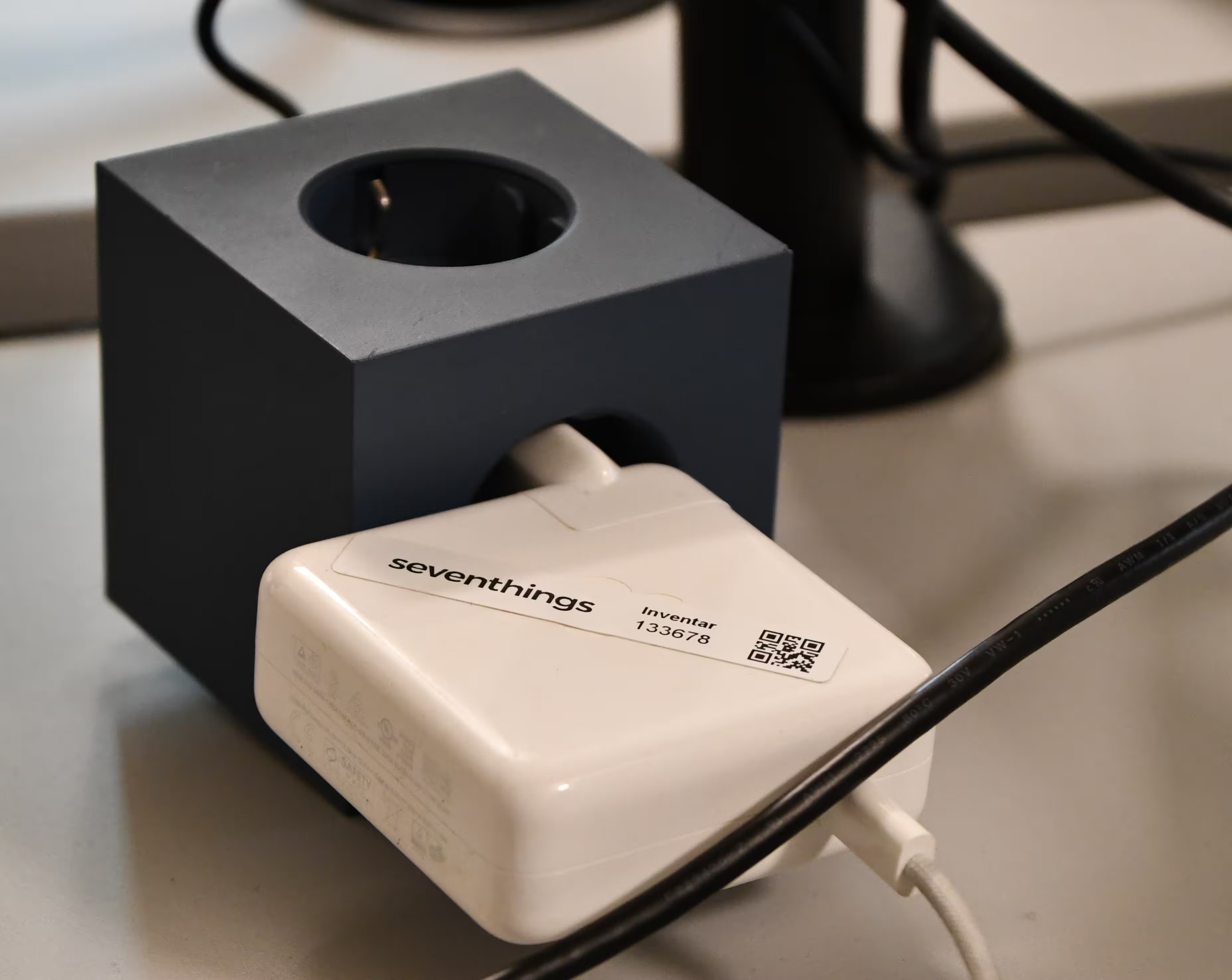
Which digital maintenance planners help with predictive maintenance? CMMS or ERP maintenance modules are suitable for stationary systems, while CAFM systems are ideal for building services. Predictive maintenance based on condition data requires IoT or condition monitoring platforms and networked equipment with sensors. For mobile assets without sensors—such as tools, testing equipment, or DGUV V3-compliant assets—an asset intelligence platform like seventhings is the right fit, as it schedules maintenance at fixed intervals and documents every inspection via a QR code scan on the device.
When does reactive maintenance still make sense? Reactive maintenance remains a sensible approach for assets whose failure poses no risk to safety or operations and which are cheaper to replace than to maintain. This includes simple hand tools that do not require inspection, whiteboards, or storage systems. A maintenance plan for a screwdriver costs more than it saves.
In practice, categorizing by criticality has proven effective:
- Class A, subject to mandatory inspection or safety-relevant: DGUV V3-compliant assets, ladders, PPE, medical technology, and testing equipment. Preventive maintenance with fixed intervals applies here.
- Class B, operationally relevant: Conference technology, pool vehicles without telematics, and cleaning equipment. Preventive or condition-based maintenance following inspection.
- Class C, low-value and easily replaceable: reactive maintenance. Tracking is still worthwhile, as Nexess Solutions (2024) reports that 12 to 18% of such assets are lost annually without it.
Florian Bell, CFO of Natsana, describes what it feels like to switch from lists to a digital system:
"We save so much time. It's hard to imagine ever going back to old-school asset management."
What now?
- Categorize assets by criticality: Which devices require mandatory inspection, which are operationally relevant, and which are replaceable? This classification shows where preventive maintenance is necessary and where reactive maintenance is sufficient.
- Import existing maintenance lists: Excel or CSV lists can be imported into seventhings, with Smart Mapping suggesting field assignments. You can be live with your first assets in under 14 days.
- Book an asset potential analysis with us: In a non-binding 30-minute session, seventhings will show you where inspection deadlines, maintenance gaps, and tied-up capital are hidden in your inventory.
Conclusion
Reactive maintenance saves on planning but comes at the cost of downtime, rush orders, and documentation efforts. Preventive maintenance shifts the workload forward and makes it predictable. It is legally required for assets subject to mandatory inspection, and according to the Machine Tracking ROI Study (2024), it reduces downtime by 30% for all operationally relevant assets. Predictive maintenance remains reserved for networked systems. For the many assets without sensors, a digital maintenance plan that links the schedule to the device via QR code is the most direct path to fewer failures.
Frequently Asked Questions
What is the difference between reactive and preventive maintenance?
Reactive maintenance involves repairing an asset after it has failed, while preventive maintenance involves servicing it beforehand at fixed intervals. Reactive maintenance saves on planning effort but leads to unplanned downtime. According to IDS (2025), this costs companies in the EU and the UK over 80 billion euros per year. Preventive maintenance reduces equipment downtime by 30%, according to the Machine Tracking ROI Study (2024).
Is preventive maintenance the same as proactive maintenance?
The terms are usually used synonymously. Strictly speaking, according to DIN 31051, maintenance is the umbrella term for servicing, inspection, repair, and improvement. Preventive maintenance refers to scheduled maintenance measures within the scope of preventive upkeep, such as cleaning, calibration, or safety inspections at fixed intervals.
Which digital maintenance planners help with predictive maintenance?
That depends on the asset. CMMS and ERP modules like SAP PM are suitable for stationary equipment, CAFM for building services, and IoT platforms for predictive maintenance of connected machines. For mobile assets without sensors, such as tools, testing equipment, or DGUV V3-compliant equipment, an asset intelligence platform like seventhings schedules maintenance at fixed intervals and documents it via QR code scan.
How often must portable electrical equipment be tested according to DGUV V3?
The standard guideline for DGUV Regulation 3 is six months, or three months for construction sites. If the failure rate is below 2%, the interval may be extended—up to one year in workshops and up to two years in offices. The employer determines the binding deadlines based on a risk assessment.
Is preventive maintenance worth it for mobile tools as well?
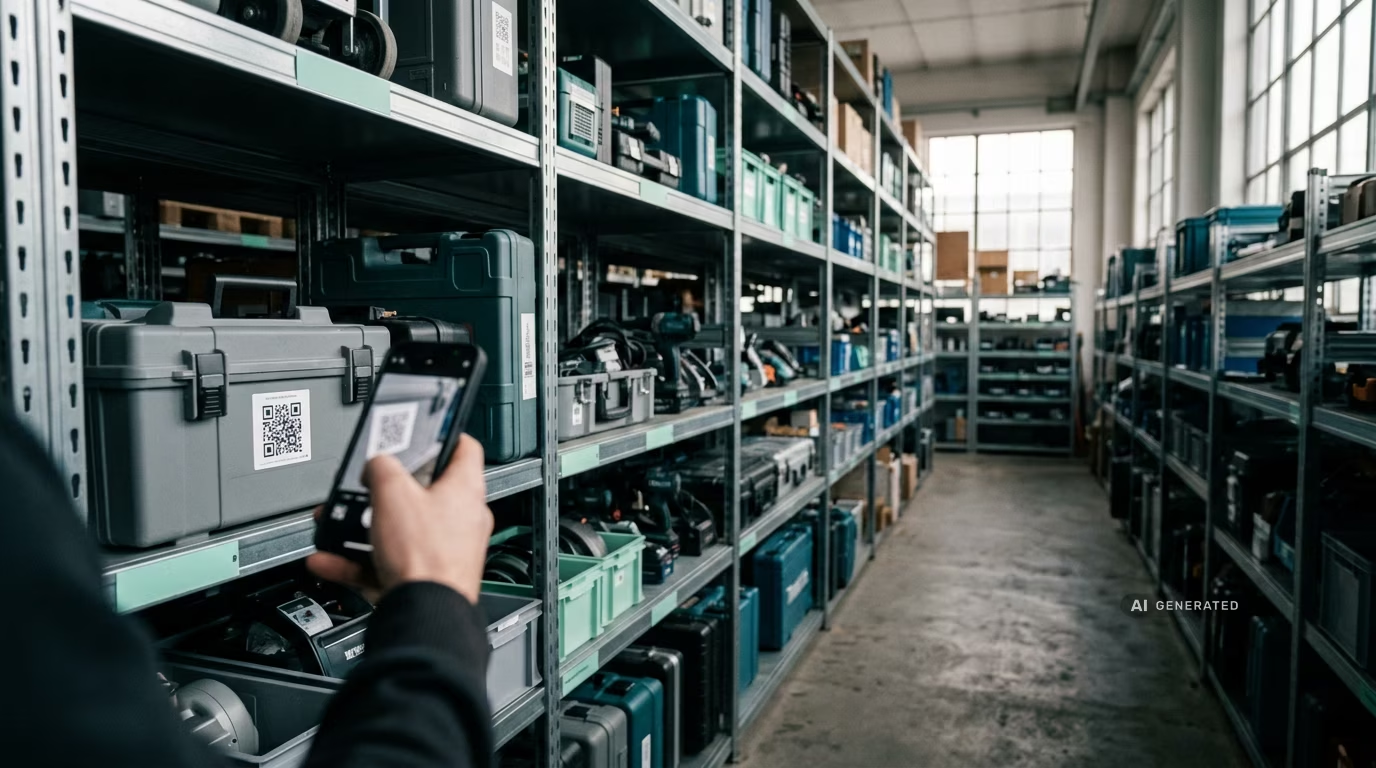
It is mandatory for power tools subject to inspection, and for all others, it pays off through fewer breakdowns and losses. According to Nexess Solutions (2024), 12% to 18% of tools are lost annually without tracking. By registering tools with QR codes and linking them to maintenance schedules, you can locate the device for its inspection date and prevent missed tests.














.svg)

.svg)
.svg)