
Maintenance of Air Filtration Systems: Deadlines, Documentation, and Digital Planning
When did you last change your air filter? Most facility managers cannot answer this question immediately. The proof is buried in an Excel spreadsheet, a folder, or the memory of the technician in charge.
For maintenance managers, this is no trivial problem. Air filtration systems are part of a building's HVAC infrastructure and are subject to clear deadlines under VDI 6022 and VDMA 24186. Missing these deadlines risks not only poor air quality but also fines and liability issues during audits.
This article breaks down the legal deadlines by filter class, explains the consequences of non-compliance, and clarifies where digital maintenance planning comes in: managing the mobile assets associated with the system, such as testing equipment, PPE, and the maintenance technicians' tools.
Key Takeaways
- G3/G4 filter classes are typically changed every 3–6 months, F7–F9 every 6–12 months, and HEPA filters based on differential pressure rather than a fixed calendar date.
- VDI 6022 Sheet 1 sets a maximum deadline: the first filter stage must be changed after 12 months at the latest, and subsequent stages (excluding particulate filters) after 24 months at the latest.
- 41% of audits fail due to manually maintained asset records (ISACA, 2024); filter change logs are a classic example of this.
- seventhings manages the testing equipment, PPE, and tools of HVAC technicians digitally. The control of the systems themselves remains the responsibility of CAFM and building management systems.
What are maintenance intervals for air filtration systems?
Maintenance intervals for air filtration systems are the timeframes after which filters must be replaced for hygienic and technical reasons, regardless of whether they still appear intact. These are determined by the filter class, intensity of use, and the requirements of VDI 6022. A filter that looks clean may still have lost its hygienic effectiveness.
The deadline is rarely visible. It is found in a set of regulations, not on the filter itself. This is precisely why air filter maintenance belongs in the same maintenance planning as DGUV V3 equipment or testing tools, rather than in a separate Excel list that no one opens once the technician has left the building.
What does "maximum deadline" mean in the context of VDI 6022? VDI 6022 Sheet 1 stipulates that the first filter stage must be changed after twelve months at the latest. All subsequent stages, with the exception of particulate filters, must follow after 24 months at the latest. These are upper limits, not targets. If there is high load or the final pressure differential is reached, they must be changed sooner. seventhings maps these deadlines as recurring maintenance tasks for the responsible technicians.
What legal requirements apply to air filtration systems?
Three sets of regulations overlap: VDI 6022 for hygiene, VDMA 24186 for the scope of technical maintenance, and the Industrial Safety Regulation (BetrSichV) for the general obligation to maintain work equipment safely. Anyone familiar with only one of these has a gap in their compliance.
VDI 6022 Sheet 1 governs hygiene requirements for HVAC systems: filter replacement intervals, as well as initial inspections twelve months after commissioning and follow-up inspections every 24 to 36 months by trained specialists. VDMA 24186 Part 1 supplements this with a component-oriented service program for air handling units and systems. Unlike VDI 6022, VDMA 24186 does not specify fixed calendar deadlines. Instead, the standard defines which tasks are to be performed periodically and which as needed, ranging from fan testing to heat exchanger cleaning.
The BetrSichV fundamentally obligates operators to keep work equipment in a safe condition and to document inspections. This also includes the testing equipment and protective gear used by maintenance technicians. This is precisely where HVAC maintenance intersects with what seventhings covers.
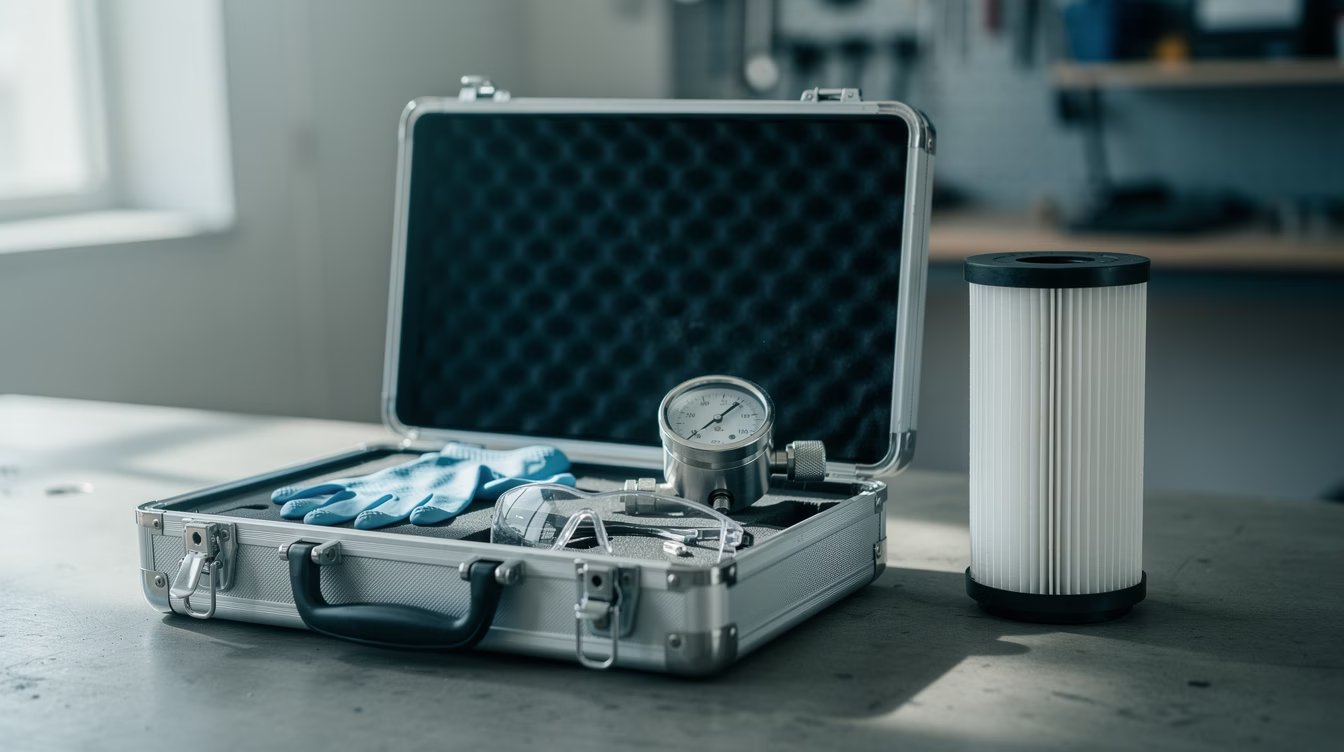
In conversations with maintenance managers, I see the same pattern over and over: the system itself is usually well-documented because a CAFM system or the maintenance service provider handles it. However, the technicians' mobile tools and testing devices are not tracked centrally anywhere: the differential pressure gauge, the PPE, the spare filter set in the service van. This is exactly the gap that seventhings closes.
Who is authorized to change air filters in HVAC systems? VDI 6022 requires trained specialists with the appropriate qualifications (Category A or B) for hygiene-related tasks. The filter change must be performed on the dust-air side, and seals and filter frames must be checked. Anyone who has not documented the qualifications and the most recent training for each technician cannot prove compliance during an audit. seventhings links testing equipment and training records directly to the responsible employee.
What happens if maintenance deadlines are missed?
Missed filter changes rarely show visible consequences early on. That is precisely what makes them dangerous. Dirty filters initially increase energy consumption because the fans have to work against the rising pressure drop. Over time, air quality declines, odors occur, and during inspections by health authorities or as part of occupational safety audits, the missed deadline becomes a documented non-compliance.
Economically, the problem usually appears first in the documentation, not in the system itself. According to ISACA, 41% of cases involving manually managed asset and maintenance data lead to audit errors (ISACA, 2024). Furthermore, Forrester notes that 73% of companies with ERP systems also use Excel in parallel (Forrester, 2023), usually for the very records required during HVAC maintenance: who changed which filter and when, with what testing equipment, and was the technician qualified at that time?
For the HVAC systems themselves, this is not the area that seventhings covers. CAFM systems like Planon or Archibus document the system. However, the testing equipment used to measure differential pressure, the technicians' PPE, and the spare filter inventory in the service vehicle fall through the cracks for most facility teams because no system is responsible for them.
What seventhings can do – and what belongs in CAFM
This distinction is important, especially because it often blurs in practice: seventhings is not a solution for the HVAC system, building management systems, or plant control. That is what CAFM systems are for, as they manage maintenance schedules for stationary equipment. seventhings operates one level deeper, focusing on the mobile assets needed for maintenance that typically do not appear in the serial or network numbers of a CAFM system:
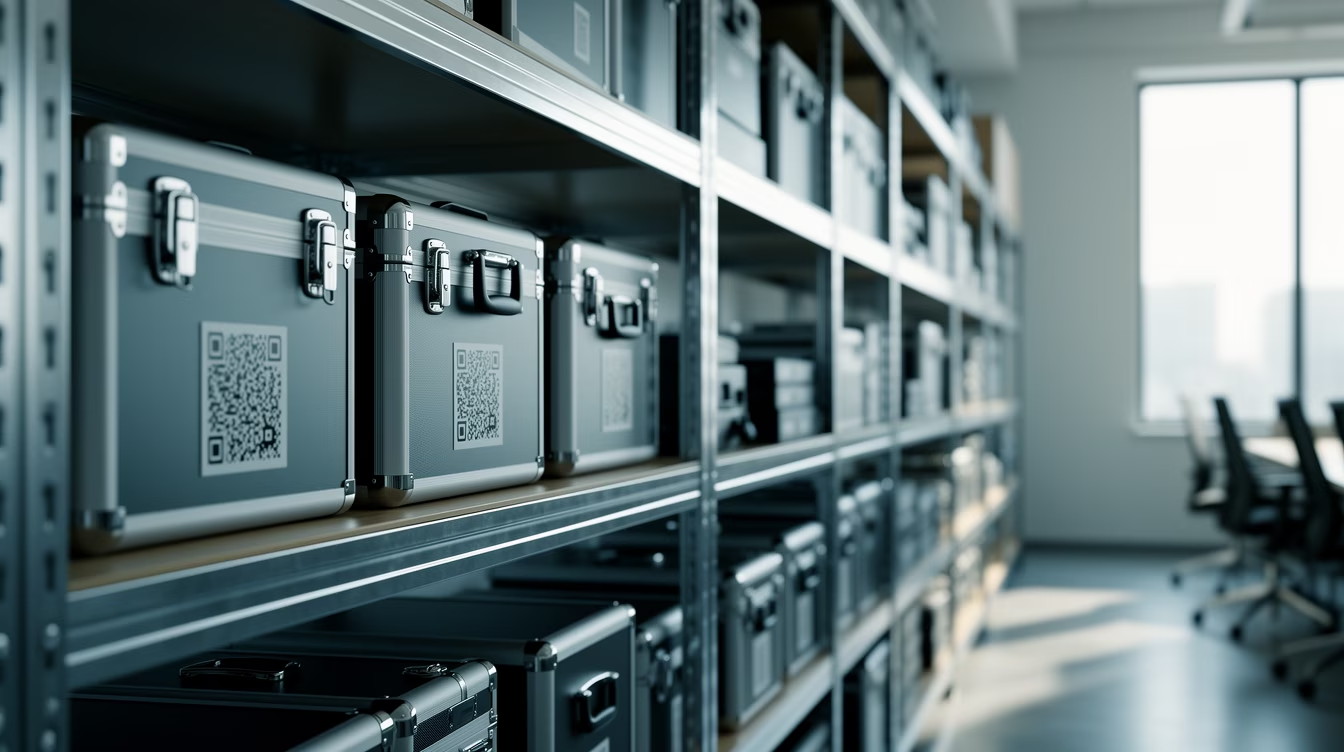
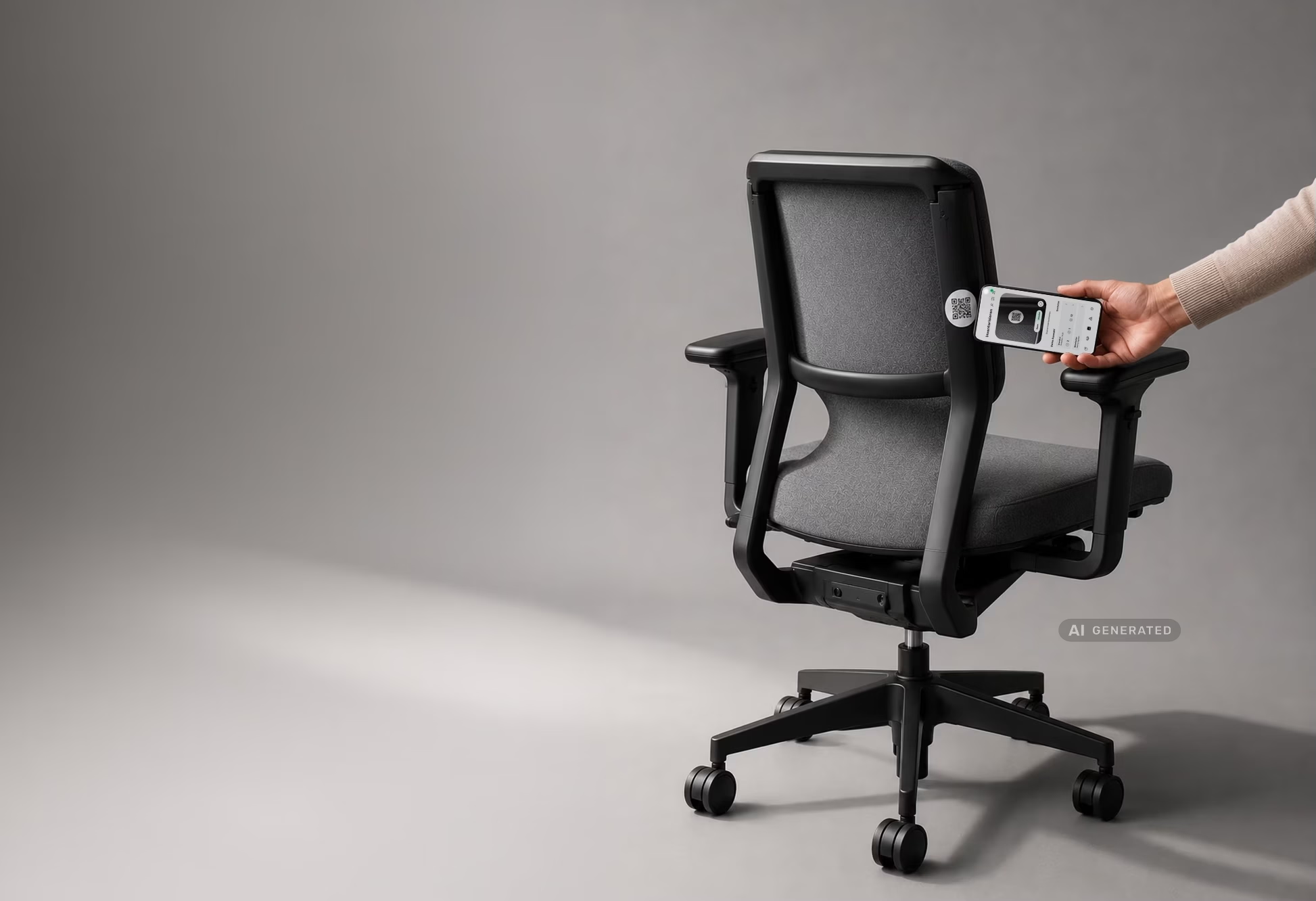
- Differential pressure gauges and other testing equipment for HVAC technicians, including calibration deadlines and Identification via barcode or QR code
- PPE for maintenance technicians that must be worn during filter changes
- Spare filter inventory in the service vehicle or warehouse, so a technician doesn't arrive on-site without the correct filter
- Tools and mobile measuring equipment that circulate between multiple locations
Does an HVAC system itself count as one of the assets that seventhings manages? No. Stationary ventilation and air conditioning systems with fixed building management system integration are CAFM territory. seventhings manages the mobile assets around them: testing equipment, PPE, and tools. This creates the connection between the technician performing the maintenance and the equipment they need to do it.
Digital maintenance planning achieves three things here: it reminds the responsible technician in good time before a deadline expires, it links the task to the appropriate testing equipment and the current PPE, and it generates a digital record for every change with a timestamp, the technician's name, and the testing equipment used. What it does not do: control the HVAC system itself, monitor differential pressure values live, or replace the building management system. That remains the task of the system controller.
Which documents do you need for maintenance verification?
Which documents do I need for the maintenance verification of an air filter system? For reliable verification, you need at least: the date of the last filter change per filter stage, the filter class used, the qualification certificate of the technician performing the work, and, in the case of testing equipment such as differential pressure gauges, the current calibration status. VDI 6022 also requires that the filter stage and the date of the last change be clearly visible on the filter chamber.
During an inspection by the health department or as part of an occupational safety audit, what matters is whether you can provide proof of the change in under five minutes. This is the same standard we have already described for audit-proof inventory management: a system is only as good as the proof it provides in an emergency.
In practice, it often turns out that the filter change documentation exists, but is scattered: a photo in a technician chat, an entry in a CAFM ticket, a note on the filter chamber. When asked, it is rarely possible to consolidate these three sources in under an hour. Digital maintenance planning solves this by attaching the proof directly to the task and the asset, in one place instead of three.
What now?
- Inventory of mobile HVAC assets. Record the maintenance technicians' testing equipment, PPE, and spare filter stocks separately from the system documentation in the CAFM.
- Digitally store deadlines. Enter the maximum VDI 6022 deadlines for each filter stage as recurring tasks, including the person responsible and the required testing equipment.
- Automate verification. Have every change documented with a timestamp, technician, and testing equipment so that audit proof is ready in minutes instead of hours.
If you would like to see what this looks like for your specific facility assets, book a free maintenance planning demo with us.
Frequently asked questions about air filter system maintenance
How often does an air filter in an HVAC system need to be changed?
Practice depends on the filter class and load: pre-filters (G3/G4) every 3–6 months, fine filters (F7–F9) every 6–12 months. VDI 6022 sets maximum intervals of 12 months for the first filter stage and 24 months for subsequent stages.
Does the 24-month interval also apply to HEPA filters?
No. According to VDI 6022, particulate air filters (HEPA) are exempt from the standard interval. Their replacement is based on differential pressure and manufacturer specifications, not a fixed calendar date.
Is VDMA 24186 the same as VDI 6022?
No. VDI 6022 regulates hygiene-related deadlines and inspections. VDMA 24186, on the other hand, defines which maintenance tasks must be performed on which components periodically or as needed, without specifying concrete calendar deadlines itself.
Can seventhings manage the maintenance of my ventilation system?
No. Stationary HVAC systems connected to building management systems belong in a CAFM system. seventhings manages the mobile assets related to maintenance: testing equipment, PPE, and technician tools.
What are the risks of missing filter replacement deadlines?
In addition to higher energy consumption and poorer air quality, you risk documented deficiencies during audits. According to ISACA, 41% of manually maintained maintenance records contain errors that are flagged during an audit (ISACA, 2024).












.svg)

.svg)
.svg)