

Why facility management is flying blind without an asset database
by Christoph Hennig · FM & Workspace, seventhings
Key Takeaways
- 18% of operating assets cannot be located during audits — audit-proof FM reporting is virtually impossible without an asset database (KPMG 2024)
- 73% of ERP users continue to manage their operational assets in parallel Excel files — the ERP does not solve the FM data problem (Forrester 2023)
- CAFM suites address buildings and spaces, not individual conference technology, specific pieces of furniture, or individual test equipment schedules
- FM and workplace experts speaking at the Bridge Hub Dresden about CSRD, desk sharing, and service provider contracts described the same structural problem from three different angles
At the Bridge Hub Dresden in June, the formal agenda covered three different topics: CSRD reporting, desk-sharing utilization, and service provider contracts. Upon closer inspection, it was the same conversation held three times. Each time, the same building block was missing: a reliable data foundation at the object level.
What is an asset database in facility management?
An asset database in facility management is the object-related data set for all physical operating assets — from conference technology and furniture to test equipment — that maps the location, condition, maintenance history, and responsibility for each individual item. It differs from space or building data in that it starts at the level of the individual object, not at the level of the room or location. The term is closely related to what is increasingly referred to in the industry as Asset Intelligence — the systematic collection and analysis of precisely this object data.
For facility management, this distinction is more than just semantics. Those managing a space can rely on CAFM data. But those who need to know whether a specific projector is still under warranty or when a fire extinguisher was last inspected need data at the object level — and in most companies, that data does not yet exist.
Three symptoms, one origin
The individual conversations at Bridge Hub 2026 sounded quite different. The common denominator only became visible when they were placed side by side.
CSRD reporting: Sustainability reports require reliable Scope 3 figures for office equipment. Without object data, you are left with industry estimates — which are vulnerable during an audit.
Desk sharing: A booking system shows reservations, not equipment status. The result: desks are marked as occupied even though 30% of seats in hybrid environments remain empty—creating a gap between booking rates and actual utilization (Nexess Solutions 2024).
Contract negotiation: The FM service provider holds all the SLA data—response times, first-time fix rates, and maintenance compliance. During renewal negotiations, your in-house facility manager lacks the independent data needed to counter their claims.
Why ERP and CAFM systems don't bridge this gap
The obvious objection: surely this is already covered in an ERP or CAFM system. In practice, that is only true on paper. 73% of ERP users still manage their operational assets in parallel Excel spreadsheets (Forrester 2023)—the ERP is accurate for accounting, but too blunt for tracking individual projectors or test equipment.
CAFM systems like Planon or Archibus solve a different problem: they manage buildings, floor space, and energy at a strategic level. They aren't designed to track whether desk 412 currently has a monitor, docking station, and chair. Even specialized IoT and condition monitoring solutions only help to a limited extent: they require networked, sensor-equipped machines, covering only a small fraction of actual inventory. The majority of operational equipment, from conference tech to office chairs, sends no data and is not captured by any IoT system.
Why isn't a CAFM system enough for asset data? CAFM software like Planon or Archibus is designed for building, space, and energy management—not for managing individual pieces of furniture, devices, or test equipment. For object-related compliance and ESG data, you need an additional, more granular data layer, such as the middleware seventhings provides between Excel and CAFM/ERP systems.
What became visible at the Bridge Hub before it had a name
The three themes in Dresden—CSRD, desk sharing, and contract negotiation—emerged from different presentations and different companies. It was only in the conversations that followed, during dinner and breaks, that it became clear how similar the root cause was: it wasn't "we don't have enough software," but "we don't have enough data about what we actually own." This is a different problem than just missing a tool. It cannot be solved by adding another dashboard as long as the underlying asset data is missing.
What does a lack of asset transparency actually cost in facility management? 18% of assets cannot be physically located during audits, resulting in remediation costs of €18,000–€35,000 per audit (KPMG 2024). On top of this are unplanned downtimes, which cost European companies across all sectors tens of thousands of euros annually (IDS 2025). seventhings closes this gap by recording every object individually and documenting its history seamlessly.
From reactive FM to a managed asset database
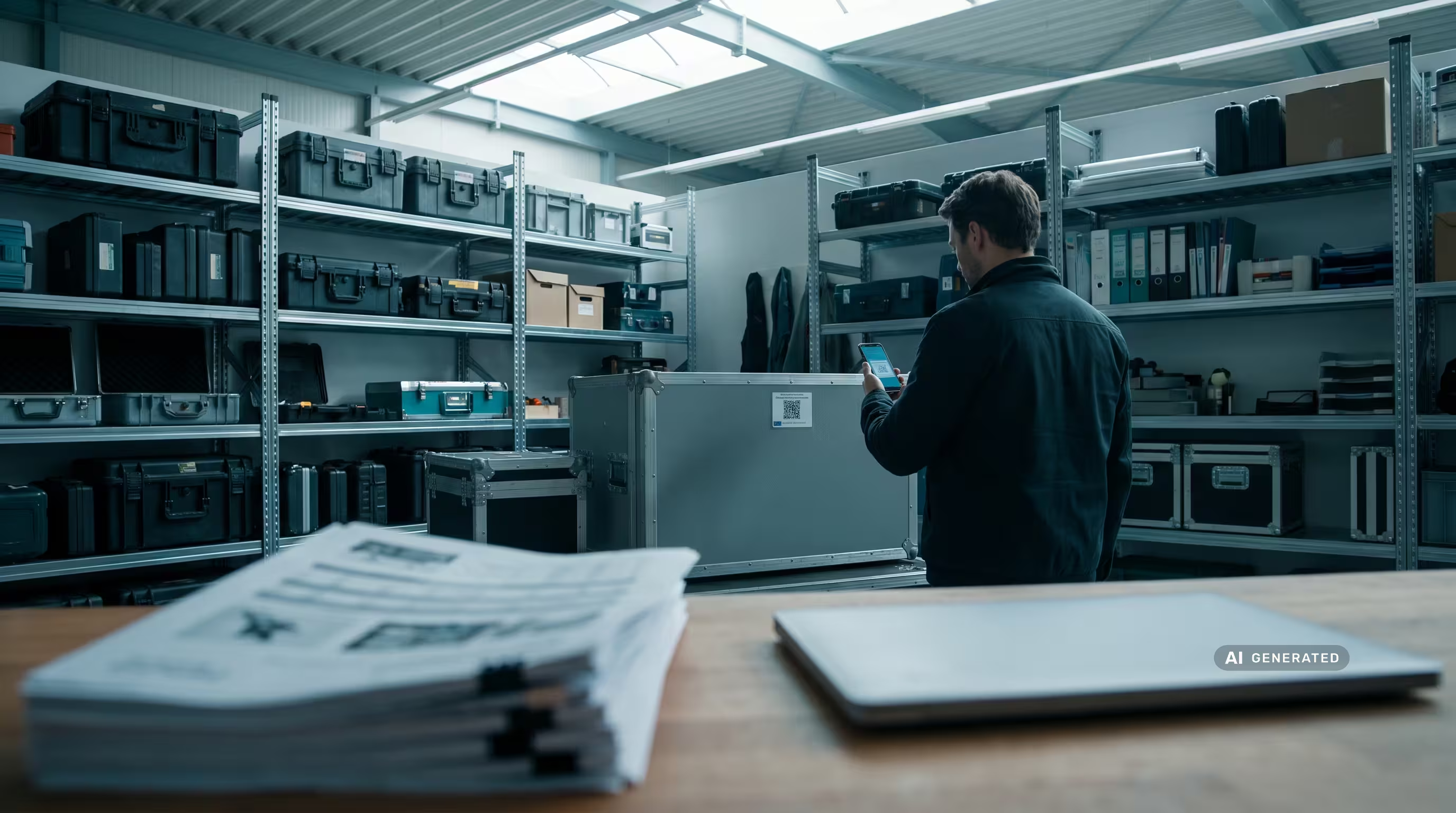
The transition doesn't start with a massive rollout, but with a clearly defined inventory: one floor, one location, or one device type. Conference technology, furniture or test equipment receive a QR label and are recorded once—creating a continuous history from that point on, rather than just a snapshot during an annual inventory. For desk-sharing areas this means that booking and equipment status are based on the same data, rather than in separate systems.
How does Asset Intelligence differ from traditional CAFM or IWMS? Asset Intelligence focuses on the object level — the individual piece of furniture, device, or test equipment — whereas CAFM/IWMS systems operate at the building and floor level. A more in-depth comparison of both categories can be found in the article IWMS vs. Asset Management Software. seventhings deliberately positions itself as middleware, not as a replacement for existing CAFM or ERP systems.
What now?
- Request an asset potential analysis. A 30-minute conversation will reveal the biggest blind spots in your facility management inventory — whether it's CSRD, desk sharing, or service provider contracts.
- Digitize a limited inventory. One floor, one device type, or one location as a pilot — with the first assets live within 14 days.
- Derive reliable key figures from object data. Utilization rates, maintenance history, and Scope 3 data become exportable instead of disappearing into Excel lists and filing cabinets.
Frequently asked questions
Why isn't a CAFM system enough for complete asset transparency?
CAFM software is designed for building, space, and energy management. It lacks the object level required for individual conference technology, furniture, or test equipment — this is where a supplementary data layer like Asset Intelligence is needed.
Why doesn't the ERP solve the FM data problem on its own?
73% of ERP users continue to manage their operational assets in parallel using Excel (Forrester 2023). While the ERP correctly reflects the balance sheet value, it does not track the operational status, location, or maintenance history of individual objects.
What are the concrete costs of missing asset data during an audit?
18% of assets cannot be physically located during audits, resulting in remediation costs of €18,000–€35,000 per audit (KPMG 2024). This is in addition to missed maintenance deadlines and unplanned downtime.
How does desk sharing relate to a lack of asset data?
Booking systems show reservations, but not the condition of the equipment. Without object data for monitors, docking stations, or chairs, a portion of booked spaces remains effectively unusable—around 30% in typical hybrid work environments (Nexess Solutions 2024).
Where do you start if you don't have an asset database yet?
Not with a full rollout, but with a limited inventory—one floor, one device type, or one location. An asset potential analysis shows in advance where the greatest impact lies.













.svg)

.svg)
.svg)