Implementing desk sharing: process, technology, and the biggest pitfalls
69% of companies now share more than 40% of their workstations among employees (CBRE, 2026). Nevertheless, many implementations fail for the same reasons: unclear zone rules, a lack of clean-desk discipline, and equipment that no one can identify once desks are swapped. This guide shows workplace and facility managers the process, the necessary technology, and the mistakes that most frequently delay an implementation.
Key Takeaways
- According to CBRE (2026), 69% of companies share more than 40% of their workstations among employees – and the trend is rising.
- Global office occupancy rose from 38% (2024) to 53% (2025), the highest level since March 2020 (CBRE, 2026).
- According to IDC (2023), employees spend 5.3 hours per week searching for devices and equipment.
- According to PwC/RealFM (2025), 65% of facility management managers in the DACH region do not yet use AI-supported processes.
What is desk sharing?
Desk sharing refers to a workspace model in which multiple employees share a fixed pool of desks instead of permanently assigning a dedicated workstation to each employee. Occupancy is situational: via reservation software, through fixed team zones, or on a walk-in basis. Unlike remote work policies, desk sharing does not change the place of work, but rather the assignment of person to desk – and consequently, the assignment of the equipment at that desk.
What exactly is desk sharing? Desk sharing is an office concept where workstations are not permanently assigned but are used by multiple employees on a rotating basis. Booking is handled via software, zone rules, or free choice of seating. seventhings complements this model with a focus on the equipment available at each desk.
Why does the implementation of desk sharing fail in practice?
The majority of problems do not arise with the booking software, but in the first few weeks after the rollout. Facility and IT teams plan the space without considering the equipment – with consequences that only become apparent during operation.
Three patterns recur in customer conversations: First, zone rules and clean-desk policies are communicated but not enforced because no one is responsible for monitoring them. Second, the booking software remains isolated from the question of which equipment should be available at a desk – monitors, docking stations, or headsets end up wherever they were last left. Third, there is a lack of a pilot phase: companies roll out desk sharing across entire floors immediately instead of testing it with one location or team and making adjustments.
The DACH-wide Facility Management Monitor 2025 by PwC, RealFM, FMA Austria, and SVIT FM Switzerland also reveals a digitalization gap: 65% of respondents do not use AI-supported processes in their daily work, and another 24% only use them occasionally (PwC/RealFM, 2025). Without a reliable data foundation regarding physical assets, any digitalization in workplace management will stall at this point.
What are the steps to successfully implement desk sharing?
A robust implementation follows six steps that integrate space, booking, and equipment from the very beginning:
- Inventory assessment: Record desks, monitors, docking stations, headsets, and conference technology per floor or location – as a basis for the booking model and equipment planning.
- Define a zone model: Decide whether walk-in, reservation-based booking, or fixed team zones suit the company – often a combination is best.
- Select booking software: Implement a tool for space planning and reservations that aligns with the chosen zone logic.
- Communicate a clean-desk policy: Clearly define responsibilities for returning and maintaining equipment before the rollout begins.
- Start a pilot phase: Test one floor or team for four to six weeks before rolling it out to other locations.
- Evaluation and rollout: Analyze usage data and equipment losses from the pilot phase, adjust the process, and then scale.
Cross-location rollouts often fail in practice at step 1: Without a clean baseline for equipment, it is impossible to properly evaluate a pilot phase or plan the subsequent rollout.
What software do I need for desk sharing?
Desk sharing requires two distinct software layers that are often confused. Booking and reservation software answers the question of who is using which desk and when—it manages space planning, zone rules, and desk availability. An asset intelligence platform answers a different question: what equipment is available at a desk, is it functional, and who is it assigned to? Both layers complement each other but do not replace one another.
Which workplace management solutions efficiently support space planning and desk sharing? For space planning and desk booking, specialized reservation and booking tools are used to manage zones, calendars, and occupancy. To determine what equipment is available and ready for use at these desks, an additional asset intelligence layer is required. seventhings handles exactly this second part: providing end-to-end visibility of furniture, conference technology, and mobile devices across your locations, without the need for IoT sensors.
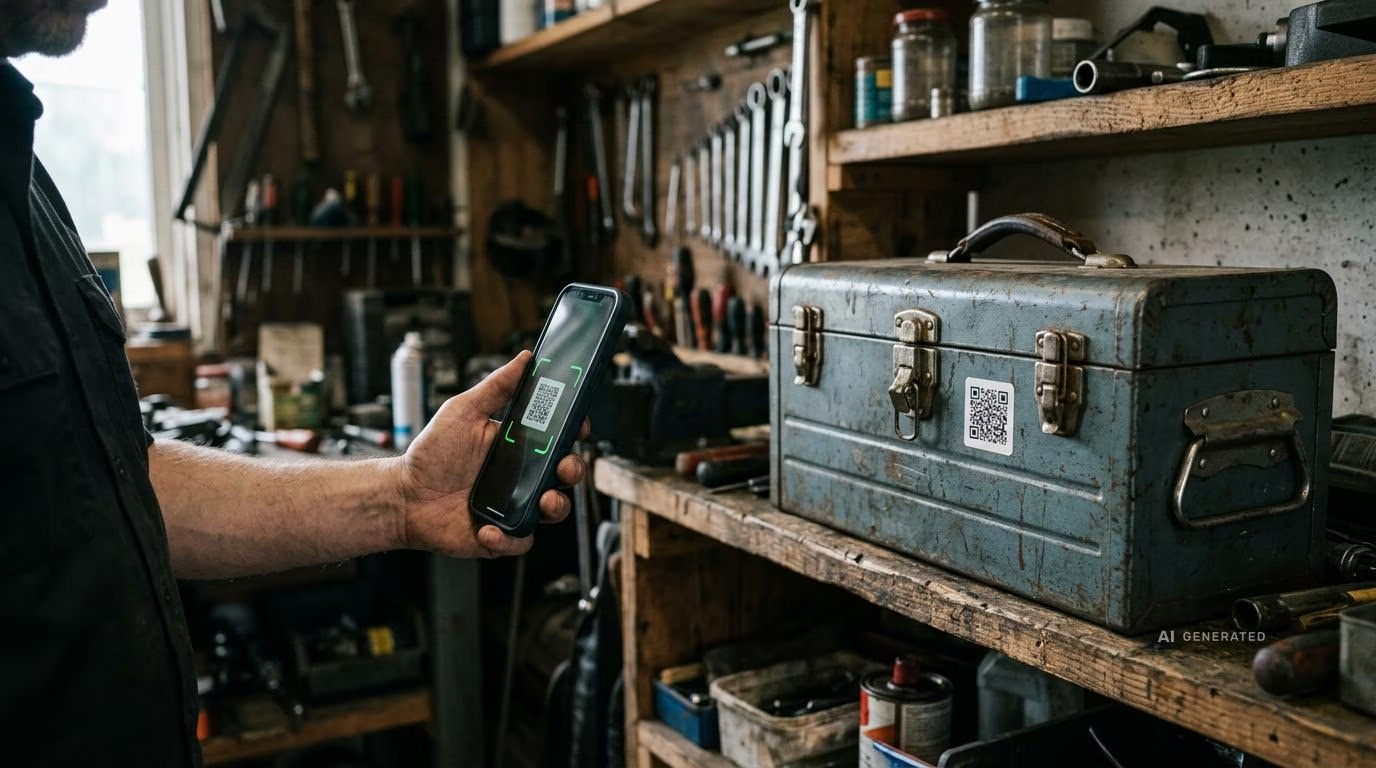
For the initial inventory, a walkthrough of the affected areas is usually sufficient, during which each object is scanned via QR code or barcode using the seventhings app . While an entire room cannot be captured with a single click, walking through the space and scanning each object provides a clean baseline for the subsequent rollout in a short amount of time.
What happens to the equipment when desks change?
As soon as workstations are no longer permanently assigned, the associated equipment moves with them: monitors are swapped between desks, headsets are left in meeting rooms, and docking stations disappear between floors. Without a central overview, this loss is difficult to contain. McKinsey estimates the value of unused or misplaced equipment in medium-sized companies at 50,000 to 200,000 euros (McKinsey, 2024), and according to IDC, employees spend an average of 5.3 hours per week searching for equipment and materials (IDC, 2023).
"A holding structure means that every asset must be clearly assigned—not just eventually, but reliably," says Holger Weitzdörfer of Bovensiepen Automobile, describing the challenge of assigning equipment across growing and changing location structures. This exact principle applies to desk sharing: when desks change, the assignment of equipment to a location, room, and—where appropriate—to employees must remain clear.
How do I avoid equipment loss with desk sharing? The most effective lever is central registration, which assigns every object to a location, room, and optionally a person, regardless of its current desk. seventhings continuously maps this assignment and makes it visible where furniture and technology are located after a desk change.
If you want to keep track of furniture and conference technology across multiple locations, you can find more detailed information in the Furniture Management use case.
How long does implementation take—and how do you get started securely?
A pilot phase for a single floor or team can be set up in the system with the initial assets in under 14 days. This timeframe covers the technical start of the inventory process, not a comprehensive analysis—that only becomes possible once real usage and movement data has been collected over several weeks.
How long does it take to implement desk sharing? The technical foundation—inventory and initial assets in the system—can be established in under 14 days. For a reliable analysis of the pilot phase, companies should plan for an additional four to six weeks of usage time before scaling to other locations.
The article " explains how workplace management differs from traditional facility management and where the two disciplines converge.What is Workplace Asset Management?".
What now?
- Inventory your assets: Check which areas are suitable for a desk-sharing pilot phase and what equipment is currently available there.
- Define a zone model: Work with Facility, IT, and HR to decide whether walk-in, reservation, or team zones are the right fit for your company.
- Use the asset potential analysis: Use the free asset potential analysis from seventhingsto identify unused or misallocated equipment before the rollout.
Frequently asked questions about desk sharing
What is desk sharing?
Desk sharing is a workplace model where multiple employees share a pool of desks instead of having a fixed seat assigned to each person. Booking is managed via software, zone rules, or open seating. According to CBRE (2026), 69% of companies already share more than 40% of their workstations in this way.
What software is needed for desk sharing?
Two layers are required: booking software for space planning and reservations, and an asset intelligence platform that shows what equipment is available at each desk. seventhings covers the second layer without requiring IoT sensors or network connectivity.
How can you prevent equipment loss with desk sharing?
A centralized inventory system that assigns every item to a location, room, and optionally a person prevents loss. McKinsey (2024) estimates unused equipment in SMEs at 50,000 to 200,000 euros, while IDC (2023) puts the weekly search time per employee at 5.3 hours.
How long does it typically take to implement desk sharing?
The technical inventory process, including getting the first assets into the system, can be completed in under 14 days. For a meaningful evaluation of the pilot phase, companies should plan for an additional four to six weeks of usage time before rolling it out to further locations.
What is the difference between workplace management and facility management?
Workplace management focuses on the use of workspaces from the employee's perspective, such as occupancy and desk sharing. Facility management additionally covers building services and maintenance. Both disciplines overlap in the management of furniture and mobile equipment.
Conclusion
Desk sharing rarely fails because of the booking software; it fails because equipment moves between desks without anyone keeping track. Those who plan their inventory, zone model, and a centralized view of physical assets together from the start avoid the pitfalls that cause many rollouts to stall. A pilot phase on a single floor will show within a few weeks whether the model and process are viable for a wider rollout across the site.