
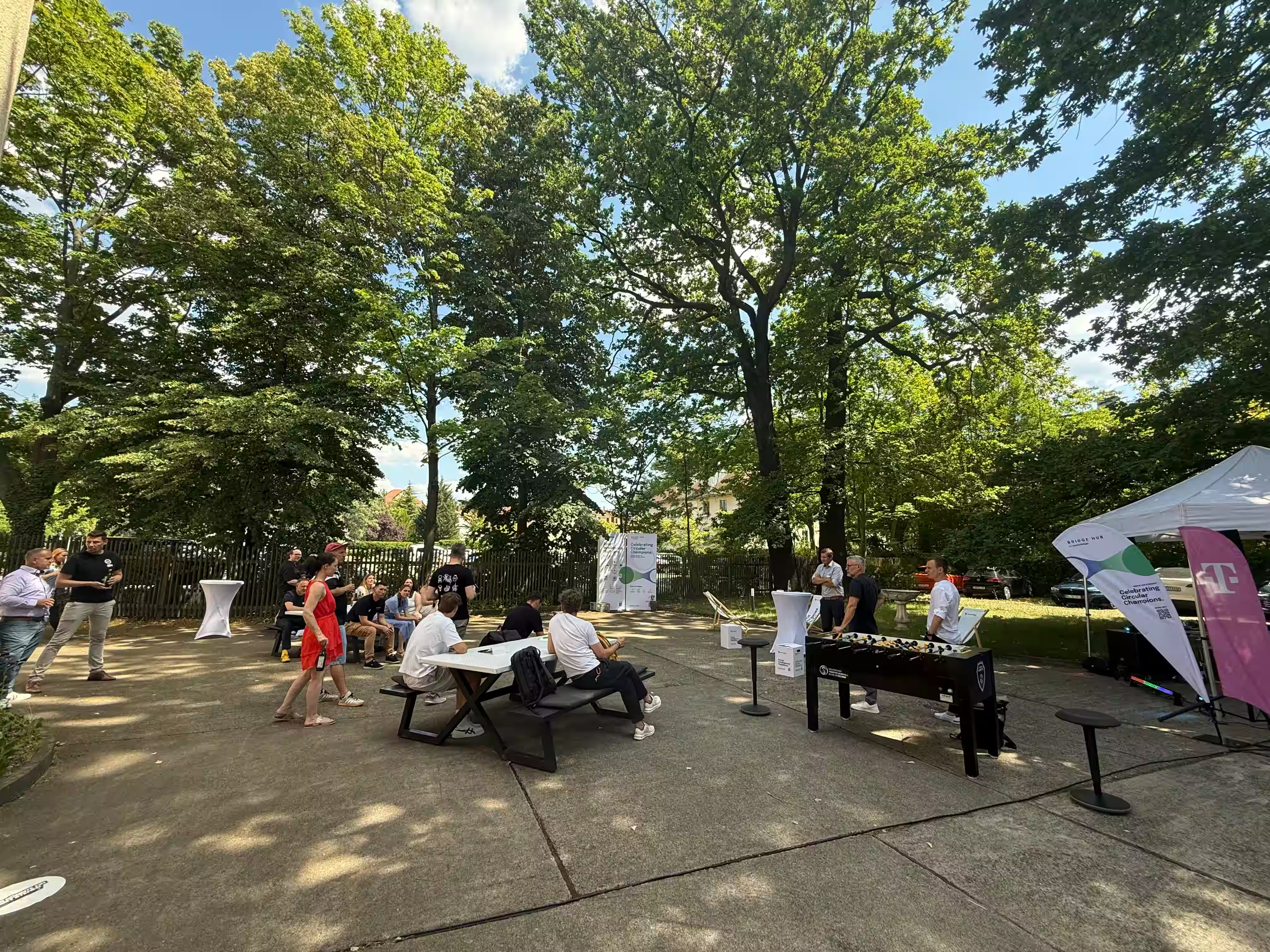
Bridge Hub Dresden: What FM professionals discussed about circular economy and asset data
Key Takeaways
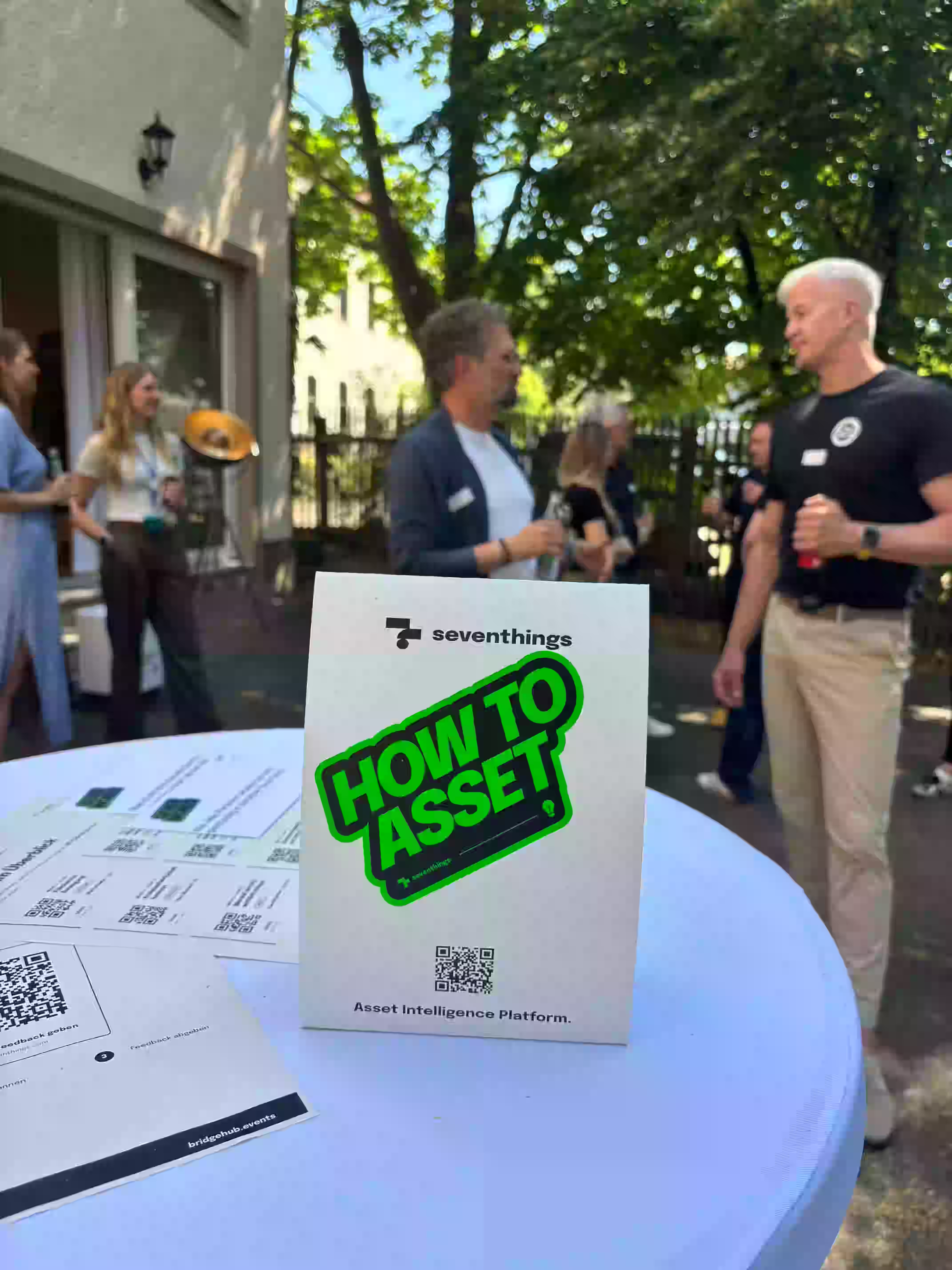
- Facility managers, workplace designers, and circular economy partners met on June 25, 2026, at the seventhings office in Dresden for the first Bridge Hub.
- Two discussion waves replaced traditional lectures: Wave 1 on spaces and furniture in their lifecycle, Wave 2 on decision-making foundations for CFOs and IT managers.
- The core topic was how to create value again from decommissioned furniture and spaces without acquiring new assets.
- The Bridge Hub continues: We're going on tour and stopping in Dortmund, Munich, Hamburg, Berlin, and Frankfurt.
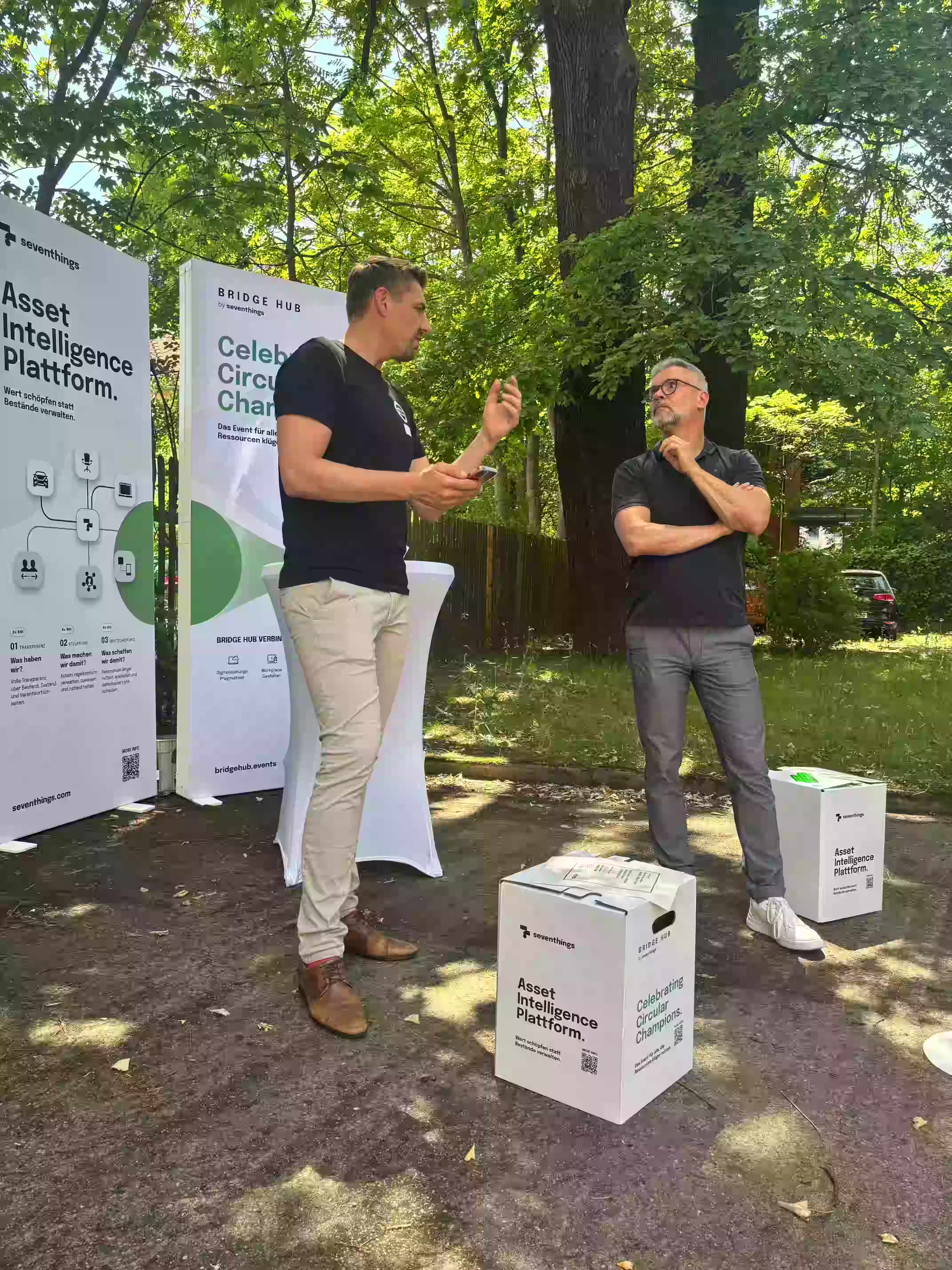
What is the Bridge Hub?
The Bridge Hub is an event series enabled by seventhings for workplace designers, digital pragmatists, and circular economy pioneers. Instead of stage presentations, the format organizes small discussion rounds where partners from research, design, and business sit together at one table to discuss the same topics. The core event takes place once a year in Dresden, supplemented by shorter after-work events in other cities under the name Bridge Hub On Tour.
The Day in Dresden
The morning began with a casual welcome and an introduction to the day's core topics. This was followed by two waves of small-group discussions, a lunch prepared by a cooking robot from Mana Robotics, and in the afternoon, time for any topics that remained open from the waves. The day concluded with a relaxed evening featuring a wine tasting, dinner, and live music: double bass met electronics, played by musicians from the Elbphilharmonie.
What was the topic of Bridge Hub Dresden 2026?
The day revolved around three questions: How can companies work more sustainably with assets they already own? What happens when research and business practice speak the same language? And why does the circular economy primarily need better decisions instead of new objects? For us, this event was the kick-off of a series that answers precisely these questions using real-world examples.
Wave 1 focused on furniture and spaces in their lifecycle. Martin Fiedler from Ljnk showed how he revitalizes disused areas and makes them usable again. Thilo Weinland integrated this into concrete circular economy processes, going beyond the traditional sustainability report. Weinland is familiar with this topic from his work at Projekt Partner and within the framework of the CIRI project: According to his observations, existing furniture released from use before the pandemic is often still in good condition, but it's scattered across various locations and not centrally recorded anywhere.
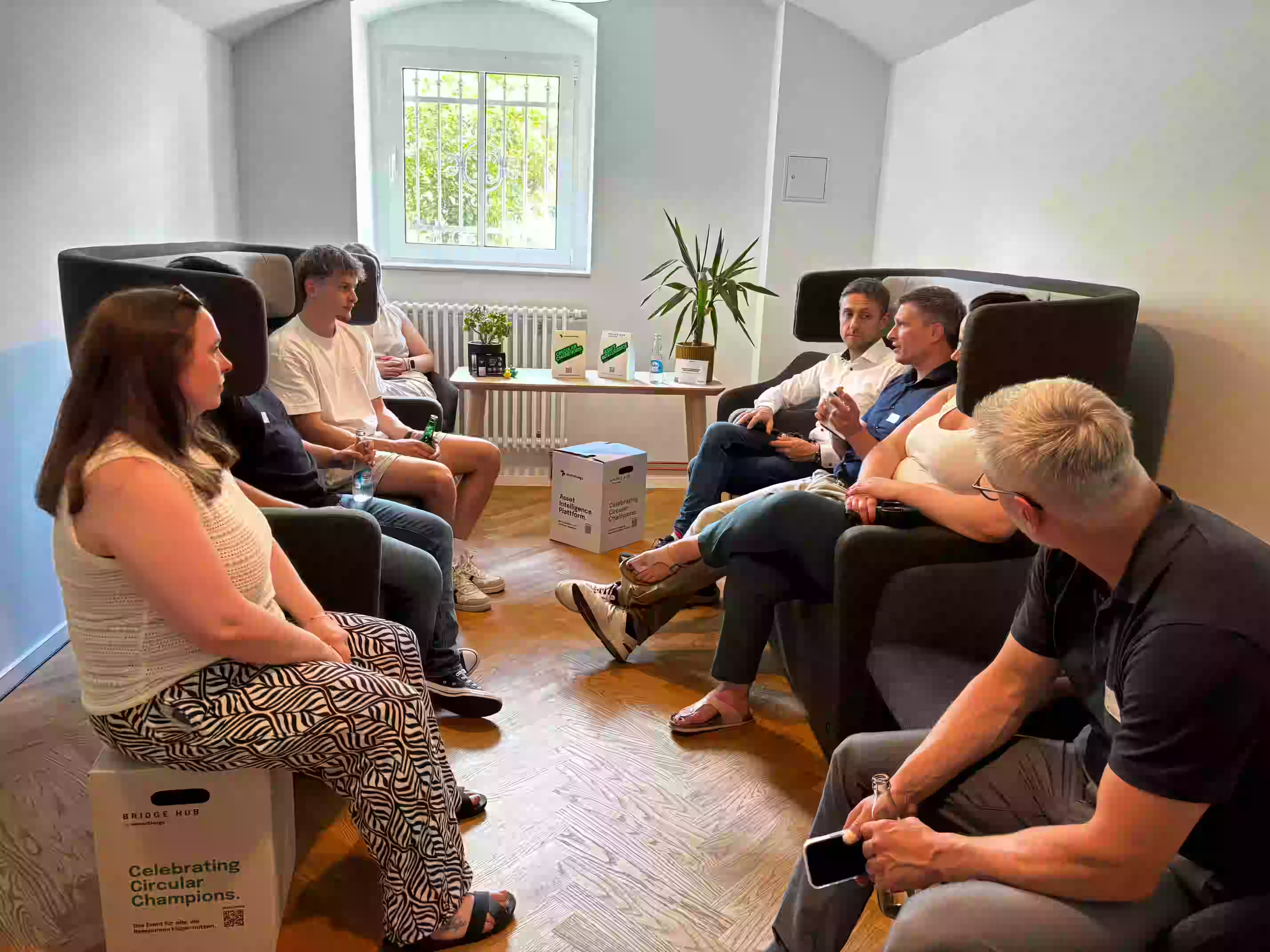
Wave 2 was aimed at everyone with financial responsibility. Yves Bruchner from OptiThinQ highlighted the key indicators that determine for a CFO whether tied-up capital can be converted back into value. seventhings provided insights into how robust decision-making data can be generated from numerous individual object data points. The most frequent point our team heard at this table was: I can only make a sound business decision if I have good data.
Why is circular economy for office furniture a facility management issue?
Furniture, IT equipment, and conference technology are among the assets most frequently disposed of unnecessarily during relocations, space reductions, or desk-sharing transitions, simply because no one knows exactly what is where and in what condition. This is precisely where seventhings comes in with a platform that records furniture and equipment without IoT sensors and makes them traceable throughout their entire lifecycle.
A recurring pattern from the discussions: the book value and actual condition of a piece of furniture diverge. A table is considered fully depreciated for tax purposes after 13 years, but it is rarely technically worn out. Without inventory data documenting material, color code, and condition, this discrepancy remains invisible, and furniture ends up in a dumpster instead of being used in the next project. For facility managers dealing with desk sharing and workspace transitions , this represents one of the hidden cost centers in operations.
📎 Related: How you can your Furniture and Furnishings Management to ensure that moves and space changes are no longer a black box.
For many participants, data infrastructure also raises the question of where their data actually resides. Thomas Hähnchen from Telekom Deutschland GmbH addressed this directly in Wave 2: As an infrastructure partner, Telekom ensures that data from seventhings customers is processed in data centers in Germany, thus remaining within European legal jurisdiction. The Telekom cloud offerings, on which this is based, are certified according to ISO 27001, among other standards, and are equipped with the Trusted Cloud Data Protection Profile (TCDP). These are two proofs with which Telekom regularly has the GDPR compliance of its infrastructure externally confirmed. Telekom has published details on this in its Compliance Documentation for Cloud Infrastructure .
What participants took away
Participant feedback was consistently positive. Two things were repeatedly highlighted: the open exchange with honest, critical questions instead of polite small talk, and the relaxed, friendly atmosphere of the evening. The absence of stage presentations was well received: in the small group discussions, participants could bring up their own practical cases instead of just listening.
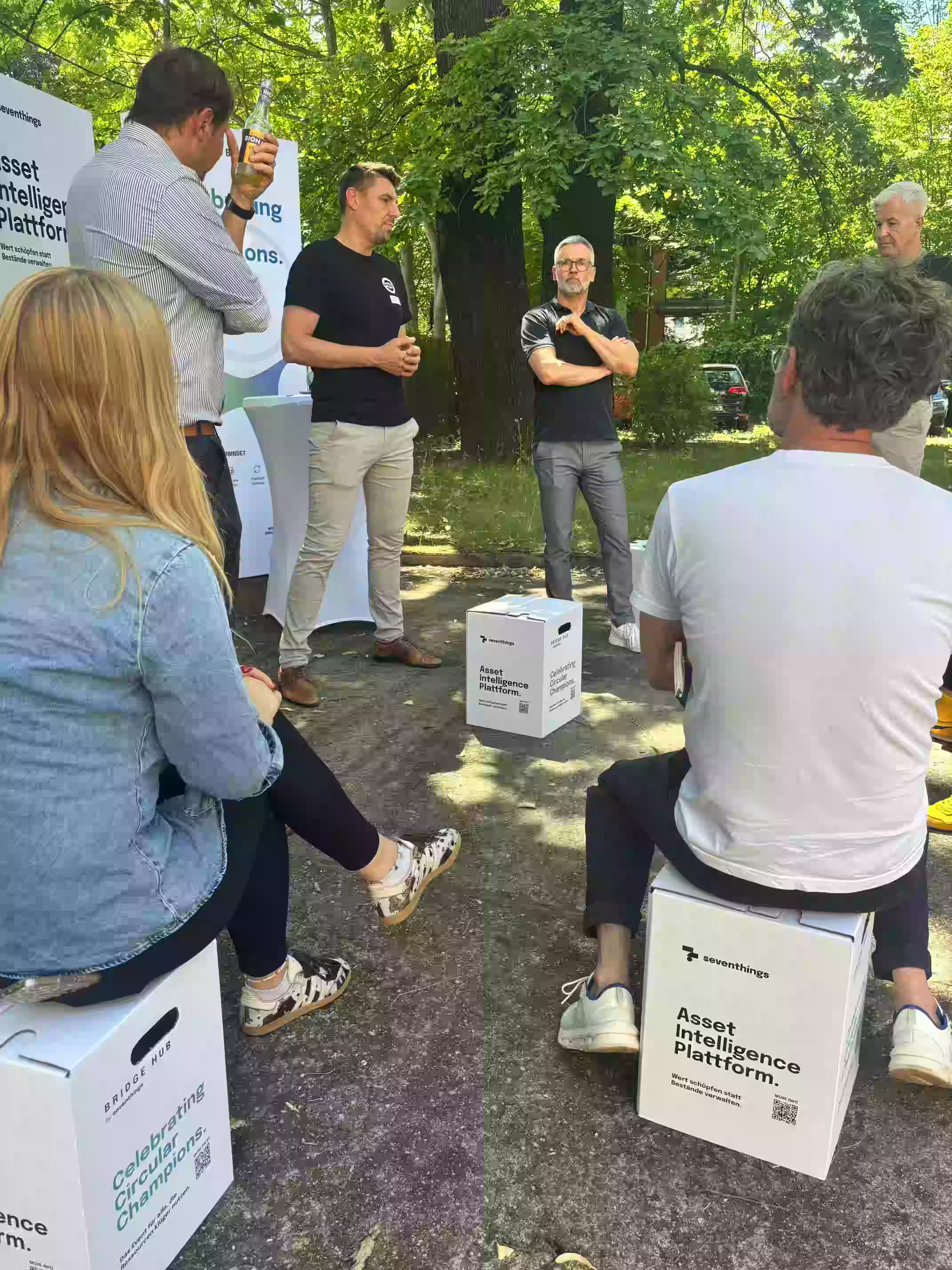
An observation from many conversations: Notably often, the discussion wasn't about missing software, but about a lack of accountability for the next lifecycle of an asset. A piece of furniture, a projector, or a company car often has clear accountability for its acquisition, but no one responsible for deciding on its transfer or disposal. This was the most interesting recurring point of the day for both us as the seventhings team and for some of our participants, because it shows that a circular economy for existing assets is first a question of responsibility and only then a question of data.
What's next
Our Bridge Hub will not remain a one-off event. The next Bridge Hub on Tour is scheduled for September . Further events of this format will follow in Dortmund, Munich, Hamburg, Berlin, and Frankfurt, in small groups for workplace and facility managers who specifically want to work on time, data depth, and unused fixed assets. Here you can pre-register for the Bridge Hub on Tour in your city.
For everyone already dealing with lending and resource management or the role of a sustainability manager, Bridge Hub On Tour provides the same three guiding questions in a more compact format.
Further questions about Bridge Hub Dresden
Are there more Bridge Hub dates? We will announce the next dates soon. Register now for the on-tour events in Dortmund, Munich, Hamburg, Berlin, and Frankfurt.
How can I participate in the next Bridge Hub? On bridgehub.events, you can specify your preferred region for an event. Participation is free.

.avif)











.svg)

.svg)
.svg)