

Barcodes, QR codes, or RFID for inventory – which one is right for your business?
Before you order labels, have you considered which identification method actually suits your inventory? Many companies choose a technology before identifying the problem they are trying to solve. The result: overly expensive RFID tags for office furniture or unreliable barcodes for assets that are constantly on the move.
QR codes, barcodes, and RFID are not competing technologies. They solve different problems depending on range, cost, and environment. This article shows which identification method fits your business type without resorting to technical overkill.
Key Takeaways
- 18% of assets cannot be located during audits, regardless of the identification method used (KPMG, 2024).
- Without systematic tracking, 12–18% of tools are lost annually (Nexess Solutions, 2024).
- According to IDC, employees spend 5.3 hours per week searching for equipment and materials (IDC, 2023).
- The choice of identification depends on throughput, range, and budget – not on trends.
What is the difference between QR codes, barcodes, and RFID?
A barcode stores a small amount of information in a one-dimensional sequence of lines and must be scanned from a short distance with a direct line of sight. A QR code stores significantly more data in a two-dimensional pattern, can be read by any smartphone, and remains readable even if the label is partially damaged or dirty. RFID tags transmit data via radio waves and can be captured without line of sight—sometimes even while walking past—at a significantly higher cost per label.
What is the difference between QR codes and barcodes? A barcode encodes data in one dimension and requires a clear line of sight to the scanner. A QR code stores more information in two dimensions and can be read using standard smartphone cameras, even if slightly damaged. For mobile tracking using company-issued phones, the QR code is often the more practical choice. seventhings supports both formats without the need for additional hardware.
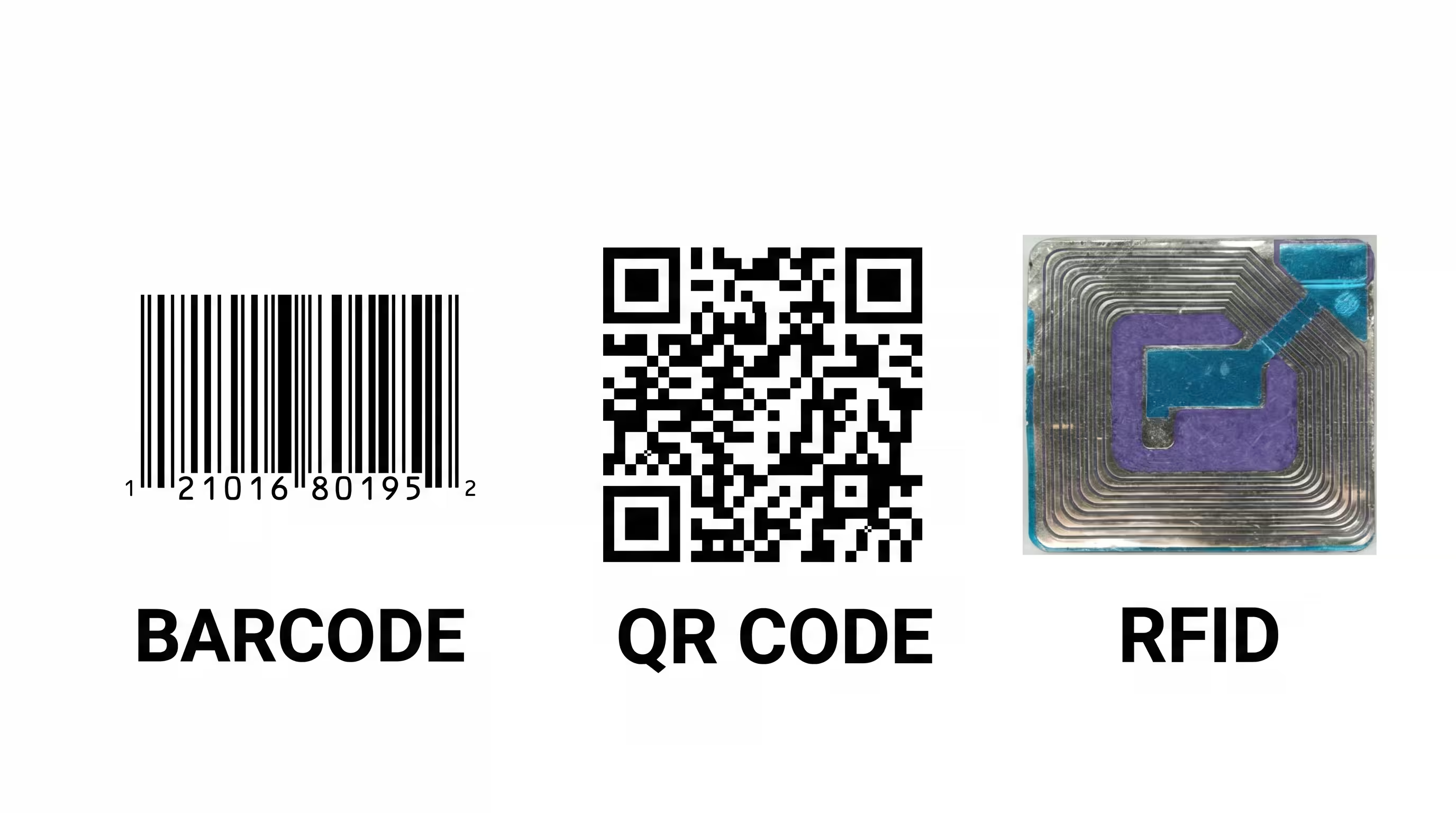
Decision guide: Which method is right for your company?
The right identification method depends on three questions: How many assets move daily? What is the value of each individual item? And who is capturing the data—a central scanning team or individual employees on-site?
SMEs with mobile assets – such as tools, conference equipment, furniture, and PPE – are usually best served by QR codes. Every employee can use their own company phone to scan items without the need to purchase additional scanner hardware. The investment per label remains low, while the amount of data is sufficient for tracking asset history and location.
Warehouses with high throughput – involving many similar incoming goods and high-speed order picking – benefit from classic barcodes. Scanning speed at stationary checkout points is high, the cost per label is low, and existing inventory management systems are typically already designed for them.
Hospitals and companies with high-value, sensitive assets – such as mobile medical equipment – often rely on RFID. Contactless scanning of entire rooms or wards via gates saves time during inventory and reduces the risk of equipment being overlooked in the hectic daily hospital routine. The higher price per tag pays off here due to the value and criticality of the devices.
When is RFID worth it compared to QR codes? RFID is worth it when assets need to be tracked contactlessly and without line-of-sight – such as with high-value mobile medical technology or safety-critical equipment. For most mobile assets in small and medium-sized enterprises, a QR code is a much more cost-effective solution. seventhings allows you to use both methods in parallel without switching software.
Practical example: Tool checkout
A medium-sized company with a fleet of mobile tools labels each tool with a QR code. When checking out an item, the responsible person scans the code with their company phone, and scans it again upon return. This creates a complete history of who used which tool and when – all without the need for separate RFID gates or additional scanner hardware.
The same principle works for conference technology in multiple meeting rooms: A QR code on a projector shows where the device was last used and when the next maintenance is due. In both cases, the effort per label remains low, tracking is handled via existing smartphones, and the inventory app makes separate scanner hardware unnecessary. Further practical implementation examples can be found in our case study overview for asset tracking in the DACH region.
Which inventory software works with QR codes, barcodes, and RFID?
Many companies delay the introduction of inventory software because they feel they must first commit to a single labeling technology. This order can be reversed.
Which inventory software works with QR codes, barcodes, and RFID? An asset intelligence platform should support all three labeling types in parallel, allowing the choice of technology to be made per asset class rather than uniformly across the entire company. seventhings reads QR codes, barcodes, and RFID tags within the same application – the decision for a specific method does not need to be made before implementing the software.
In practice, this means: furniture and tools can be labeled with QR codes, while valuable medical equipment is tracked simultaneously via RFID – all within the same inventory overview. Even with multiple locations, the database remains consistent, regardless of which labeling method is used on-site.
Conclusion
The question is not which labeling technology is the best, but which one suits your specific assets. QR codes are ideal for mobile assets in small and medium-sized enterprises, barcodes for high-throughput warehouses, and RFID for high-value or particularly sensitive inventory. Software that supports all three methods simultaneously doesn't make the decision for you—but it does remove the pressure of having to make that choice before you even get started.
What now?
- Labeling check: Get an assessment in 15 minutes of which method fits your asset classes.
- Start for free: Set up your own instance and try out seventhings directly.
- Download e-book: Read an overview of label formats and scanners (download here).
Frequently asked questions about QR codes, barcodes, and RFID in inventory management
Can I use QR codes, barcodes, and RFID simultaneously in one company?
Yes. Many companies label different asset classes in different ways—for example, furniture with QR codes and high-value medical equipment with RFID. An asset intelligence platform like seventhings displays both methods in the same inventory overview.
Is RFID fundamentally better than QR codes or barcodes?
No. RFID offers advantages for contactless scanning of large quantities, but it comes with higher costs per tag. For mobile assets in small and medium-sized enterprises, a QR code is usually sufficient. The choice depends on the value and the environment in which the asset is used.
Which labeling method is suitable for tools and mobile devices?
QR codes are particularly well-suited because they can be read with any smartphone and do not require additional scanner hardware. Nexess Solutions estimates that annual tool loss without systematic tracking is 12–18% (Nexess Solutions, 2024).
Do I have to commit to one technology before introducing inventory software?
No. seventhings supports QR codes, barcodes, and RFID simultaneously, allowing you to choose the technology based on the asset class rather than having to decide for the entire company in advance.
How much time does standardized labeling save during inventory?
According to IDC, employees spend an average of 5.3 hours per week searching for equipment and materials (IDC, 2023). Consistent labeling—regardless of the method chosen—significantly reduces this search time.















.svg)

.svg)
.svg)