

Asset Intelligence vs. Asset Management: The difference explained
by Michael Lehnert · CEO, seventhings
Key Takeaways
- Asset management tracks the current state. Asset intelligence analyzes patterns and derives actionable recommendations. The difference lies between process and insight.
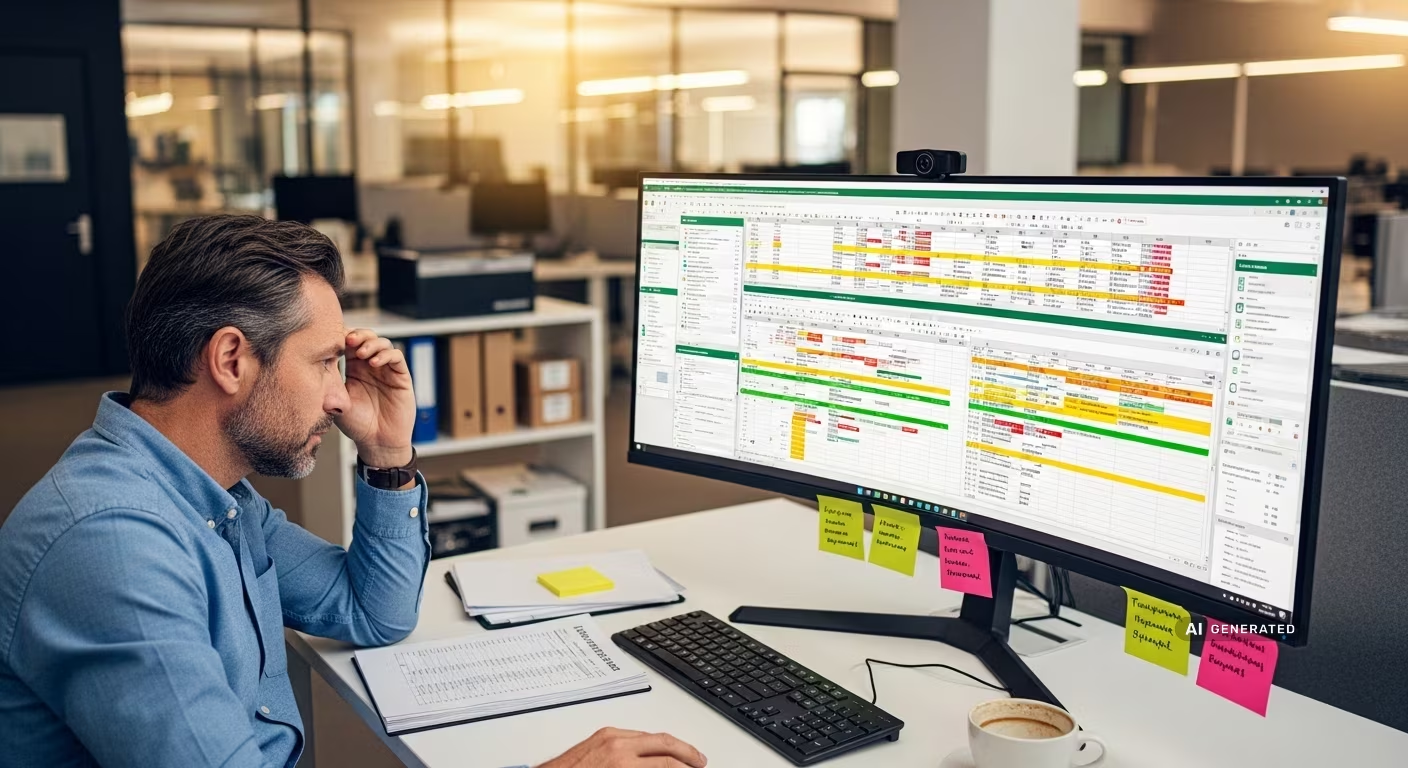
- 73% of companies with an ERP system still maintain parallel Excel lists (Forrester 2023): a sign that pure administration does not bridge the gap.
- 18% of all assets cannot be located immediately during audits (KPMG 2024), and 41% of manual asset registers fail external inspections (ISACA 2024).
- The shift from administration to intelligence pays off as soon as inventory data is used for decision-making rather than just documentation.
Those looking for asset management are usually looking for a system that tells them what is available in the company. Those looking for asset intelligence want to know what to do with that knowledge. Both terms sound similar and are often used synonymously in sales conversations. That is inaccurate. The difference determines whether a system merely documents or actually supports decision-making. That is exactly what determines the ultimate value of the software.
What distinguishes asset management from asset intelligence?
Asset management is the administration of the current state: which objects exist, where they are located, and who is currently using them. Asset intelligence builds on this and evaluates the data. It identifies patterns across time, locations, and departments, and provides concrete recommendations for action.
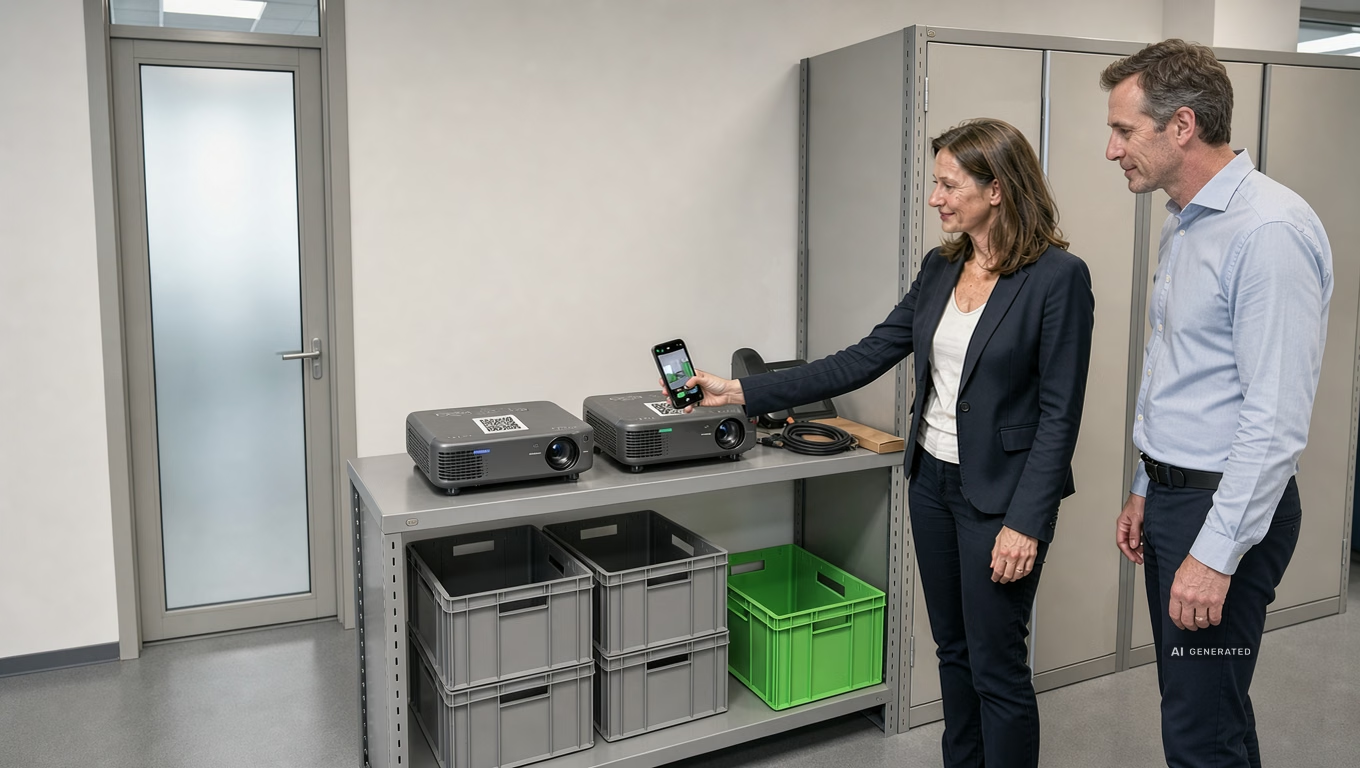
An example makes the difference tangible. An asset management system shows: "Projector #142 is in conference room 3, last inspection six months ago." An asset intelligence system additionally shows: "Projector #142 has barely been used for three months, while two identical devices are about to be purchased for department C." The first statement documents. The second prevents an unnecessary new purchase.
Both levels build on each other. Without clean administration, there is no reliable data basis for analysis. Without analysis, administration remains a digital filing system that is up to date but suggests nothing.
Is asset intelligence the same as asset management? No. Asset management documents the inventory, location, and condition of objects. Asset intelligence additionally uses this data for pattern recognition and actionable recommendations. seventhings covers both levels: administration as the foundation, intelligence as the analytical layer on top.
Why is pure asset administration no longer enough?
The numbers show that administration alone does not solve the actual problems. 73% of companies with an ERP system continue to maintain parallel Excel lists (Forrester 2023). The ERP manages inventory correctly but does not provide an operational view of individual physical objects. That is why teams fall back on spreadsheets.
The consequences become apparent during audits. 18% of all registered assets cannot be located immediately during inspections (KPMG 2024). 41% of purely manually maintained asset registers fail external audits completely (ISACA 2024). Neither of these are data collection problems. They are analysis problems: the data exists somewhere, but no one can make it actionable at the moment it counts.
What is the difference in practice? Process vs. Insight
In initial meetings with facility managers and IT directors, we at seventhings see the same pattern time and again: the inventory list exists, usually in Excel, maintained by someone who manages the overview as a side task. The list reliably answers "what do we have." It does not answer "what should we do now." It is precisely this second question that ends up costing money.
In concrete terms: A DGUV-V3 testing device appears in the list as "present, last inspection January." That is administration. Asset Intelligence adds: "Testing device is needed at two locations, but currently only used at one: borrowing is possible instead of a new purchase." The process remains identical (record object, maintain status). The insight is new, and it changes a purchasing decision.
The same pattern applies to conference technology, pool vehicles without telematics, or company mobile phones without MDM: exactly those asset classes that are too quiet to appear in ERP or IoT systems, but too valuable to ignore. A deeper classification of how specialized asset software differs from facility suites like IWMS or CAFM can be found in the article on IWMS vs. Asset Management Software.
How do I know if my company is only doing asset management, not asset intelligence? A typical sign: inventory data is retrieved exclusively for audits or stocktakes, never for ongoing decisions like procurement or redistribution. If no one in the company can answer the question "what do we do with this data," the intelligence layer is missing. seventhings connects both levels in one platform.
Which key performance indicators change due to the intelligence layer?
The analysis level has a direct impact on measurable KPIs. The Machine Tracking ROI Study 2024 quantifies the reduction of equipment downtime through systematic analysis at 30%. According to Nexess Solutions 2024, companies lose 12 to 18% of their mobile tools annually without tracking simply because no one tracks who had them last.
The difference is also evident on the financial side. McKinsey estimates the value of unused equipment still on the balance sheet in a medium-sized company at 50,000 to 200,000 euros (McKinsey 2024). Pure administration shows these objects as "present." Only analysis reveals that they are unused and turns that into a decision.
Anyone wanting to estimate these effects for their own company can find a methodology in the article on calculating ROI through asset management.
When is the step from administration to intelligence worth it?
Not every company needs the analysis layer from day one. With a few dozen assets at one location, a clean list is often sufficient. The need shifts as soon as multiple locations, multiple departments, or recurring inspection requirements come into play. Then the question "what do we do with the data" becomes more important than the question "do we even have the data."
At seventhings, we see a recurring signal for this point across more than 500 customer projects: as soon as two departments independently plan the same purchase because neither side knows what the other already owns, the management level has reached its limit. This is exactly where the first evaluation, which goes beyond mere inventory management, comes into play.
For the initial inventory, from which evaluations can later be derived, a structured approach via the use case Inventory as a Service is recommended.
At what company size does Asset Intelligence become worthwhile? There is no fixed lower limit. As a rule of thumb: as soon as multiple locations, recurring inspection requirements (such as DGUV V3), or regular audits are involved, the effort of purely manual management quickly exceeds that of an evaluated platform. seventhings is designed for companies with 200 to 5,000 employees.
How do you implement Asset Intelligence without starting a major IT project?
The greatest resistance to new asset software is rarely about the content, but rather organizational: the fear of a months-long migration. For physical assets without IoT sensors, the onboarding process can be significantly leaner than with a classic ERP or CAFM rollout.
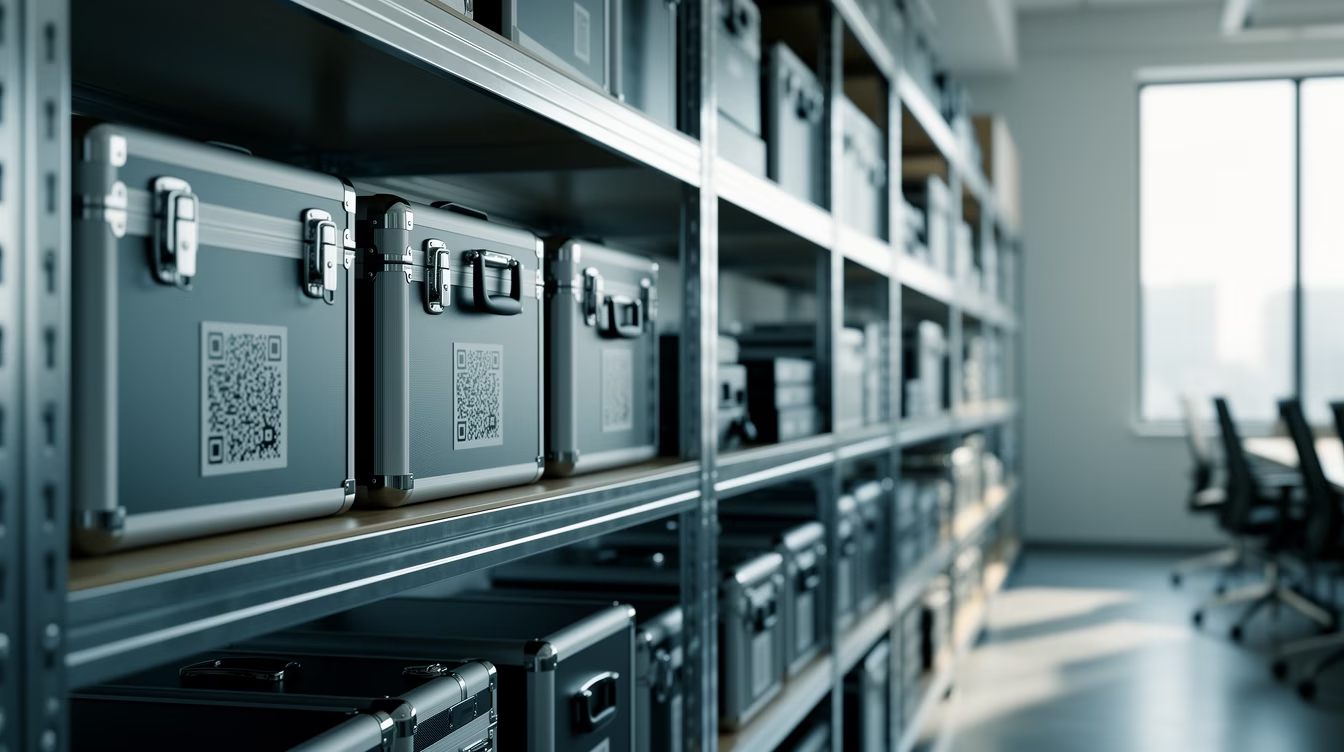
Existing Excel lists can be imported directly, objects are identified via QR code or barcode and scanned during a walkthrough of rooms or warehouses. As a rule, the first assets are live in the system in under 14 days. The analytical layer is then built up step-by-step as soon as enough data is available for reliable patterns.
Does Asset Intelligence require special hardware or IoT sensors? No. seventhings is explicitly built for physical assets without IoT sensors: mobile tools, test equipment, conference technology, furniture, or pool vehicles without telematics. Identification takes place via QR code or barcode, not via sensors or network connectivity.
Anyone who wants to assess their own starting position before getting started will find guidance on the page for Controllers and CFOs, as many of the key figures described there are broken down from a financial perspective.
What now?
- Assess inventory: Check how many assets are currently only recorded in Excel or distributed systems: this is the management level that is missing as a foundation.
- Identify gaps: Identify areas where decisions are currently being made without a data-driven basis, such as with new acquisitions or reallocations.
- Request an asset potential analysis: seventhings provides a free analysisshowing where capital is tied up in unused assets within your company and how significant the transition from administration to intelligence really is.
Frequently Asked Questions
Is Asset Intelligence just a new name for Asset Management?
No. Asset Management describes the administration of inventory, location, and condition. Asset Intelligence builds on this by evaluating that data to provide actionable recommendations. The difference lies between documentation and decision support, not in the terminology.
Can I implement Asset Intelligence without an existing asset management system?
Yes, both levels can be implemented together. seventhings combines tracking and analysis in one platform, so no separate management software is required. Existing Excel lists can be imported directly.
Does Asset Intelligence replace my ERP system?
No. Asset Intelligence complements your ERP by providing an operational view of physical objects without IoT sensors, for which ERP systems generally do not provide sufficient detail. 73% of ERP users maintain parallel Excel lists for this exact reason (Forrester 2023).
How long does it take to implement Asset Intelligence?
With seventhings, the first assets are typically recorded in the system within 14 days. A reliable data foundation for in-depth analysis is then built gradually, depending on the size of the inventory and inspection cycles.
For what company size is the shift from administration to intelligence worthwhile?
Once you have several hundred assets, multiple locations, or recurring inspection requirements like DGUV V3, the effort of manual administration usually exceeds that of an analytical platform. seventhings is designed for mid-sized companies with 200 to 5,000 employees.
Conclusion
Asset Management answers what a company owns. Asset Intelligence answers what should be done with it. Both levels need each other: without clean administration, there is no reliable analysis; without analysis, there is no data-driven decision-making. For companies currently only covering the first level, the next step is rarely a major new IT project, but rather a targeted evaluation of existing inventory data.












.svg)

.svg)
.svg)